info@railway-fasteners.com
 +86-372-5081703


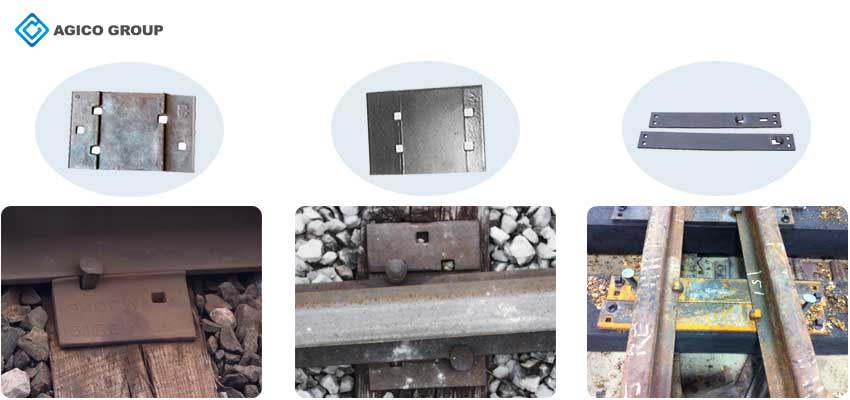
A tie plate, also known as base plate or sole plate, which is a steel plate that used between the steel rail and railway sleeper. Tie plate basically has some holes and shoulder(s). But there is no shoulder in some types of tie plate. Rail tie plate usually has tapered side to improve the stability and reduce the twisting and torsion of rails. There are close relationship between rail and tie plate. Each tie plate is generally made for corresponding size of rail. In another words, the tie plate has to be matched with width of steel rail. As for the production process, tie plate can be made by three processing ways: hot-rolled, casted and forged.
History of tie plate
- In the early days of rail track construction, there is no need of railroad tie plates. The track bed (made by stone and gravel) and wooden sleeper act as the support to steel rails. Fastening steel rails to railroad ties is mainly by dog spike.
- Since the 20th century, tie plate is widely applied into railroad track. Before nailing railroad spike into railroad tie, passes it through tie plate, which helps to fix rail and ties well.
- Nowadays, railroad tie plate is mostly used in the wooden tie constructions. At the same time, it is needed less in the concrete sleeper constructions.
Function of tie plate
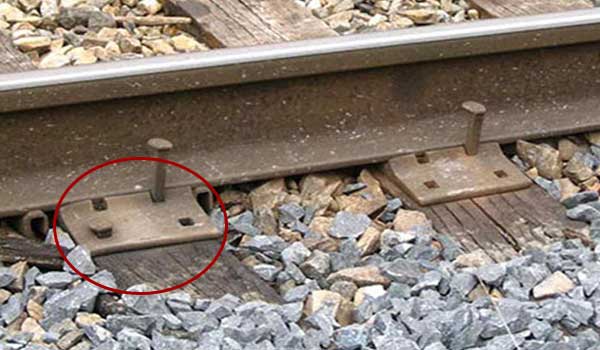
As one of the railroad components, tie plate is used to fix rail to railroad tie and keep the rail safe. To be specific, the functions of railroad tie plate as follow:
- Tie plates transmit the load from steel rail to the railroad ties. They provide even support surface for rail and prevent rail from movement.
- Tie plate helps the rail maintain their gauge, which keep the safety of train running.
- Tie plate reduce the friction between rail and railroad tie.
- Tie plate protect railroad ties from excessive wear, so that prolong their service life.
- Tie plate provide proper cant and bear the central load.
Types of tie plate
According to the different applications and design, tie plate can be divided into many types. Single shoulder tie plate, double shoulder tie plate and hook twin tie plate are three typical kinds of tie plate.
Single shoulder tie plate
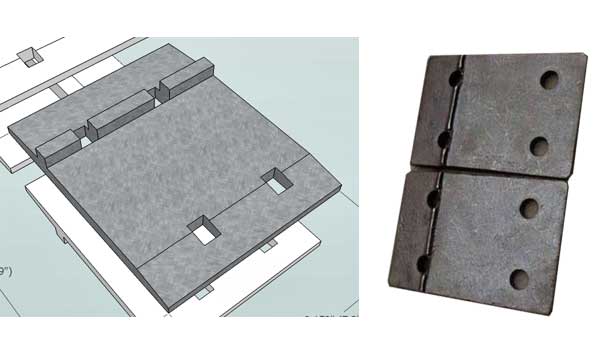
Single shoulder tie plate means the top surface of tie plate has one shoulder, which can fit the rail base. Single shoulder tie plate is an old kind of tie plate that is not available. Single shoulder tie plate is suitable for almost any rail widths. Most often, rail base width according to requirement. The single shoulder normally placed on the outside of rail.
Double shoulder tie plate
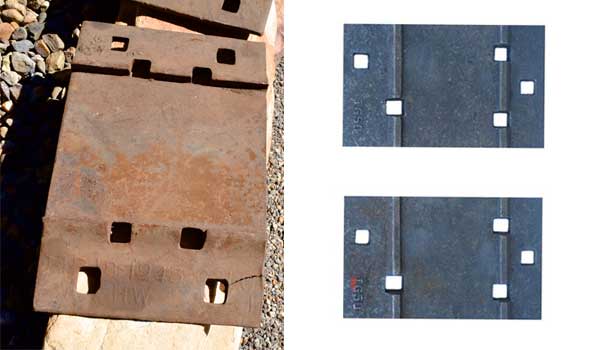
Compared to single tie plate, double shoulder tie plate contains two shoulders on the top surface. Double shoulder tie plate is also a currently used type. According to the AMREA standard, double shoulder tie plate are available for 5-1/2″and 6″base rail. Common types include 4 holes, 5holes, 6 holes, 7 holes, 8 holes.
Hook twin tie plate
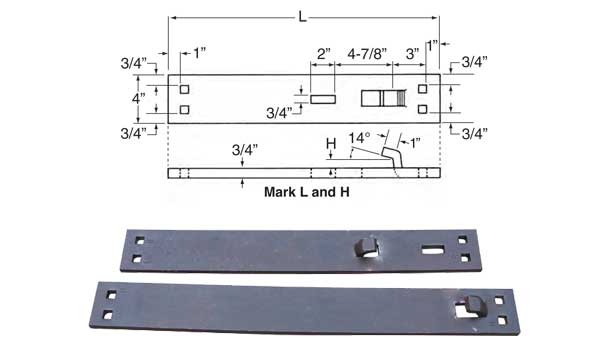
Hook twin tie plate, or HTTP for short, is a type of tie plate that is used for frog, guide rail, and behind the heel of rail switch. There is slotted hole in the hook twin tie plate, which makes it different from other kinds of tie plate. Generally, hook twin tie plate is designed with AREMA standard and it can fit any rail sections. Besides that, hook tie plate work in pairs to a single railroad tie. The diagram of hook twin tie plate is shown below:
By the types of the hook, hook twin tie plate has three normal types: type L, type LR and type H. Among all AMERA standard hook twin tie plates, 3/4” and 1” thick are two popular types.
For 3/4’’thick: L23, L27, L31, LR23, LR27, LR31, H23, H27, H31.
For 1’’ thick: L29, L33, L37, LR28, LR32, LR36, H29, H33, H37, H41.
In addition to these kinds of tie plate, there are many other types like pandrol tie plate, tie plate for KPO rail fastening, and etc.
In a word, railroad tie plate give support to rail and make railway track reliable and safe with other rail components, such as railway fish plate, rail clip and railroad spikes.