 info@railway-fasteners.com
 +86-372-5081703


RAILWAY TURNOUT COMPONENTS
Cast Slide Baseplate for Railway Turnouts
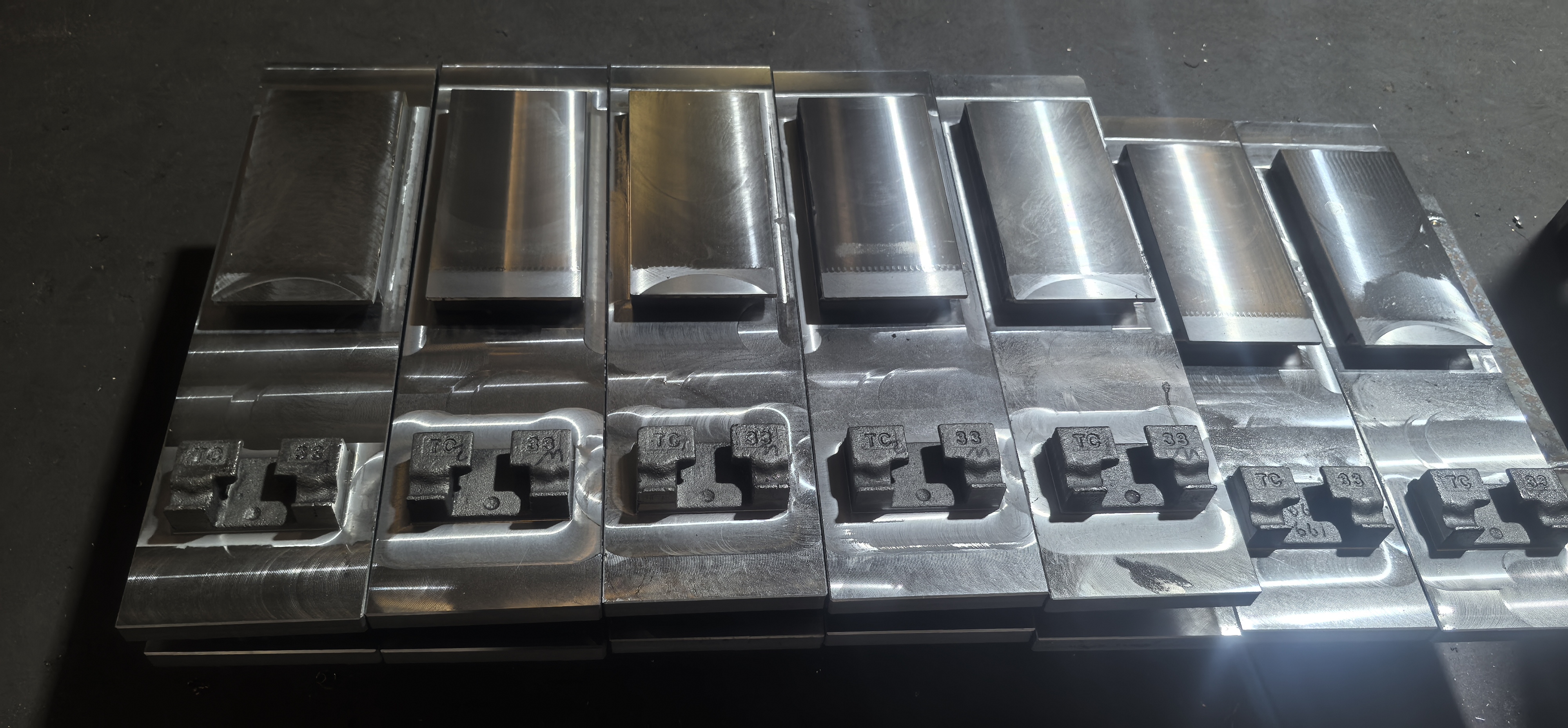
- Structure
- Integrated cast structure
- Base material
- 20SiMn cast steel base material
- Surface treatment
- Stepped composite hardening treatment
- Manufacturing
- Custom manufacturing based on drawings
Key Technical Features
-
Integrated Casting: One-piece casting eliminates the welded joint between the base plate and slide table.
-
20SiMn Cast Steel: Cast steel base material.
-
Stepped Composite Hardening: Wear-resistant sliding surface with an unhardened, tough lip.
-
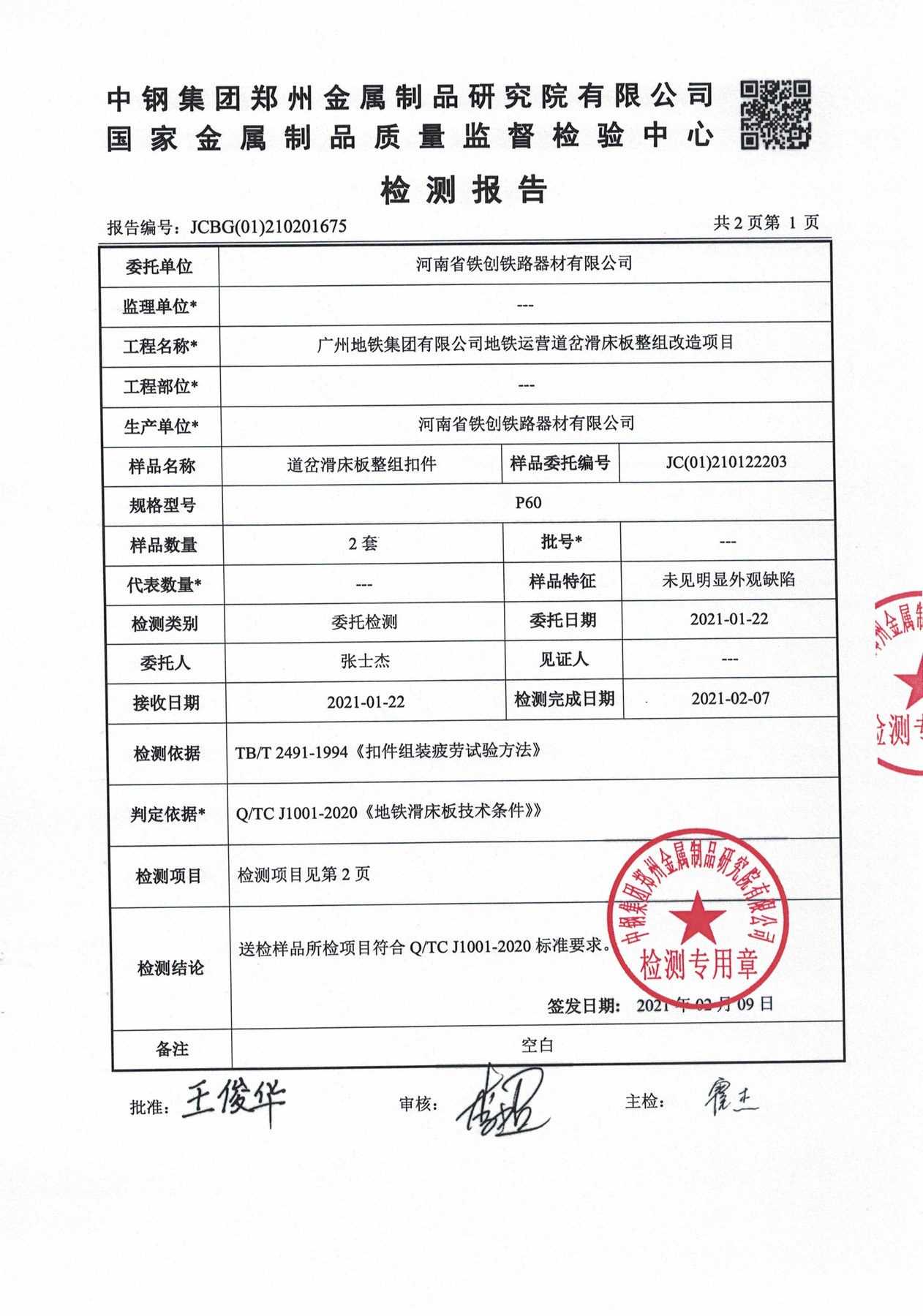
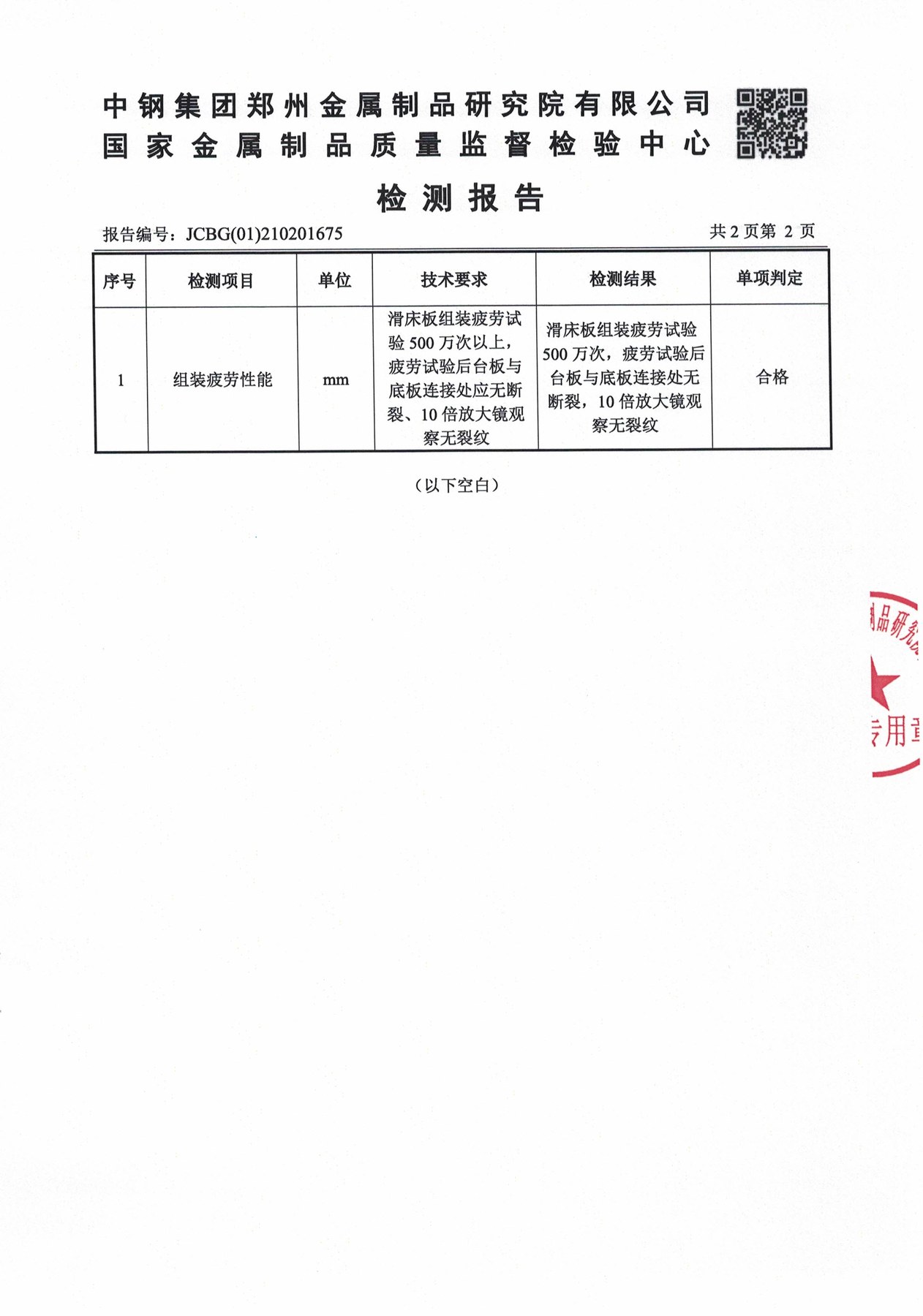
5 Million Fatigue Cycles: Completed fatigue testing without cracks.
MANUFACTURING & CUSTOMIZATION
Custom Slide Baseplate Supply for Your Turnout Project
AGICO Rail supplies custom cast slide baseplates for railway turnouts. The product features an integrated casting structure and a stepped composite hardening treatment on the sliding surface.
Manufactured according to customer drawings and technical requirements, these slide baseplates are designed for turnout applications where structural strength, impact resistance and sliding surface durability are important.
Custom Slide Baseplate Manufacturing
AGICO Rail provides slide baseplates manufactured according to customer drawings and technical requirements.
For replacement orders or new turnout projects, customers can submit existing product drawings, samples or dimensional information for technical review.
Customization can cover:
- Overall dimensions and structural geometry
- Base plate and mounting hole arrangement
- Slide table and retaining tongue details
- Material grade and technical requirements
- Surface treatment requirements
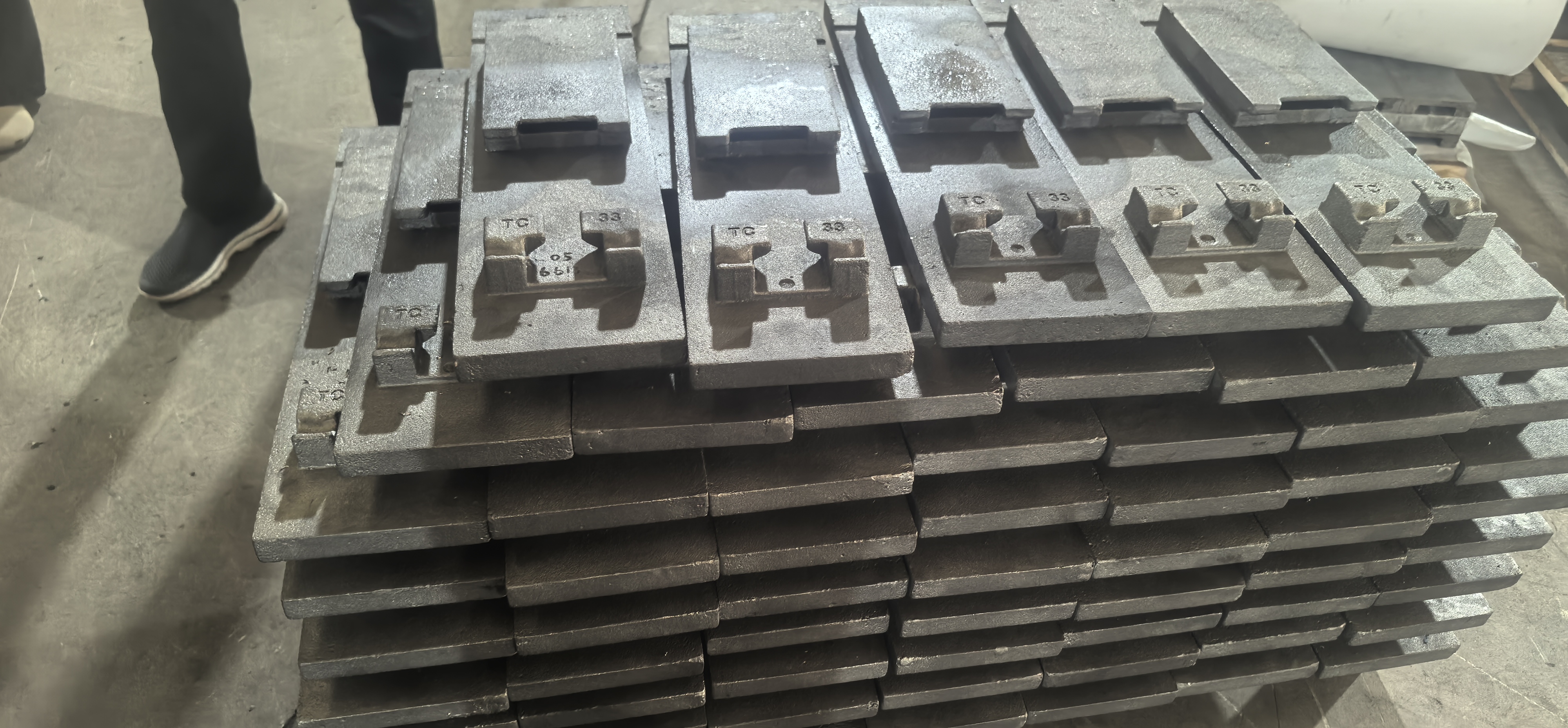
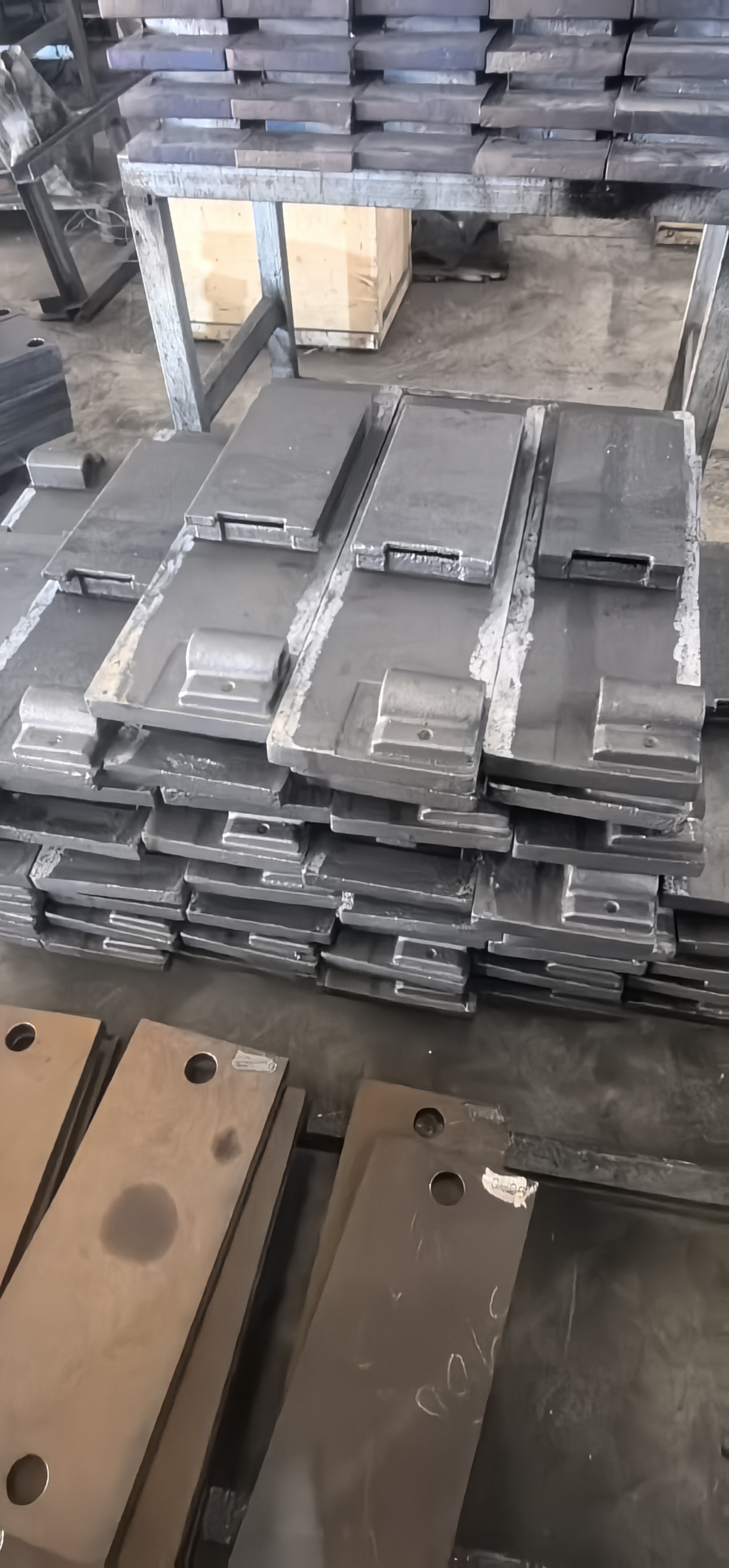
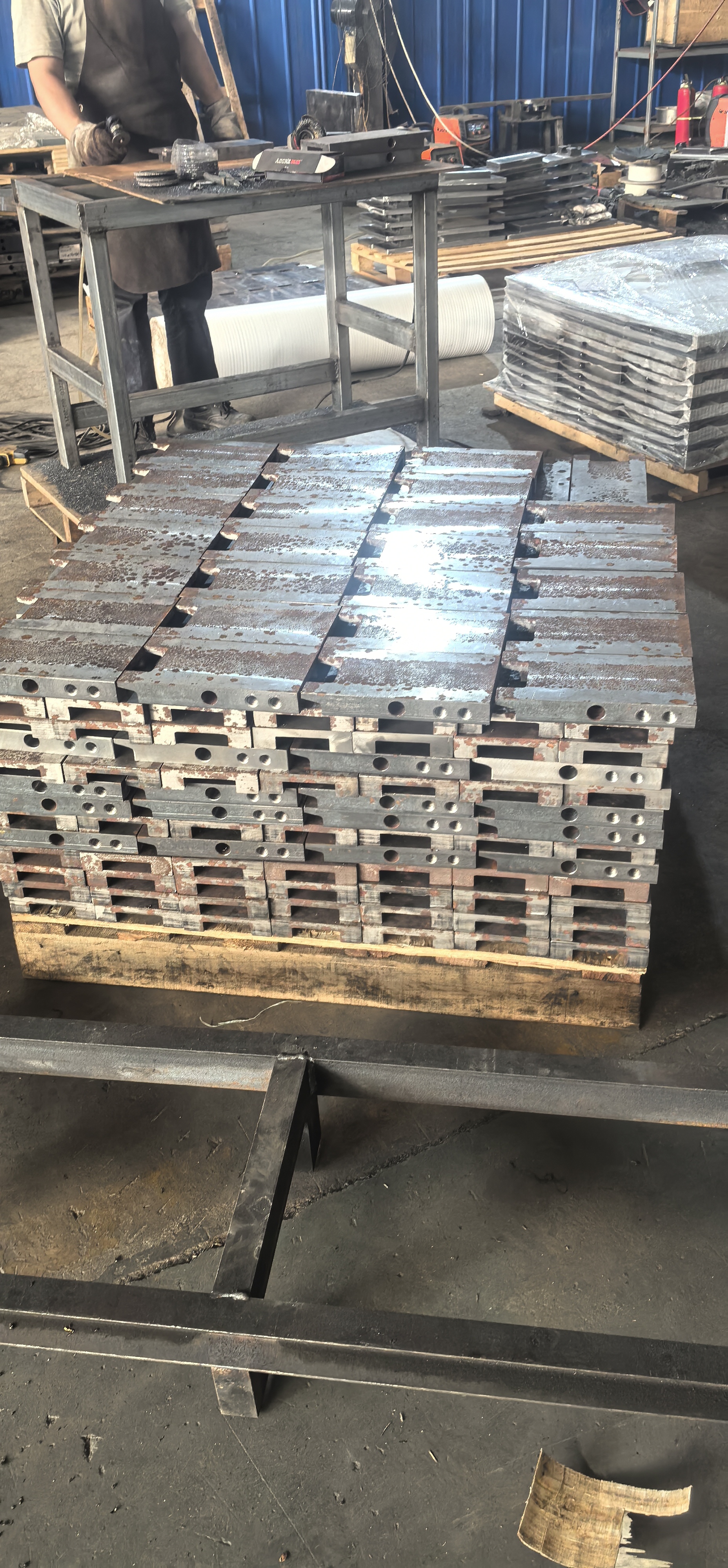
Product Advantages and Finished Baseplates
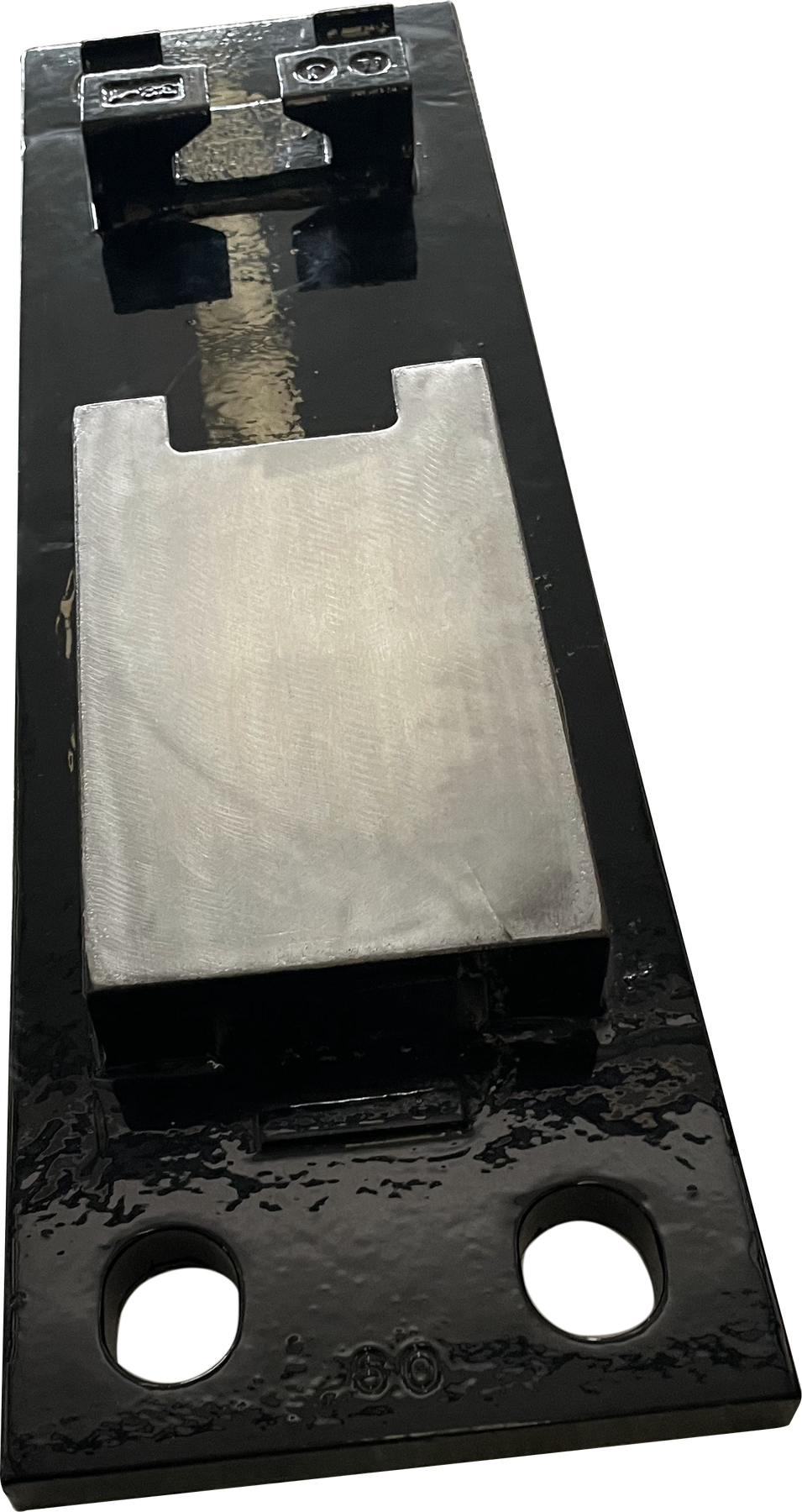
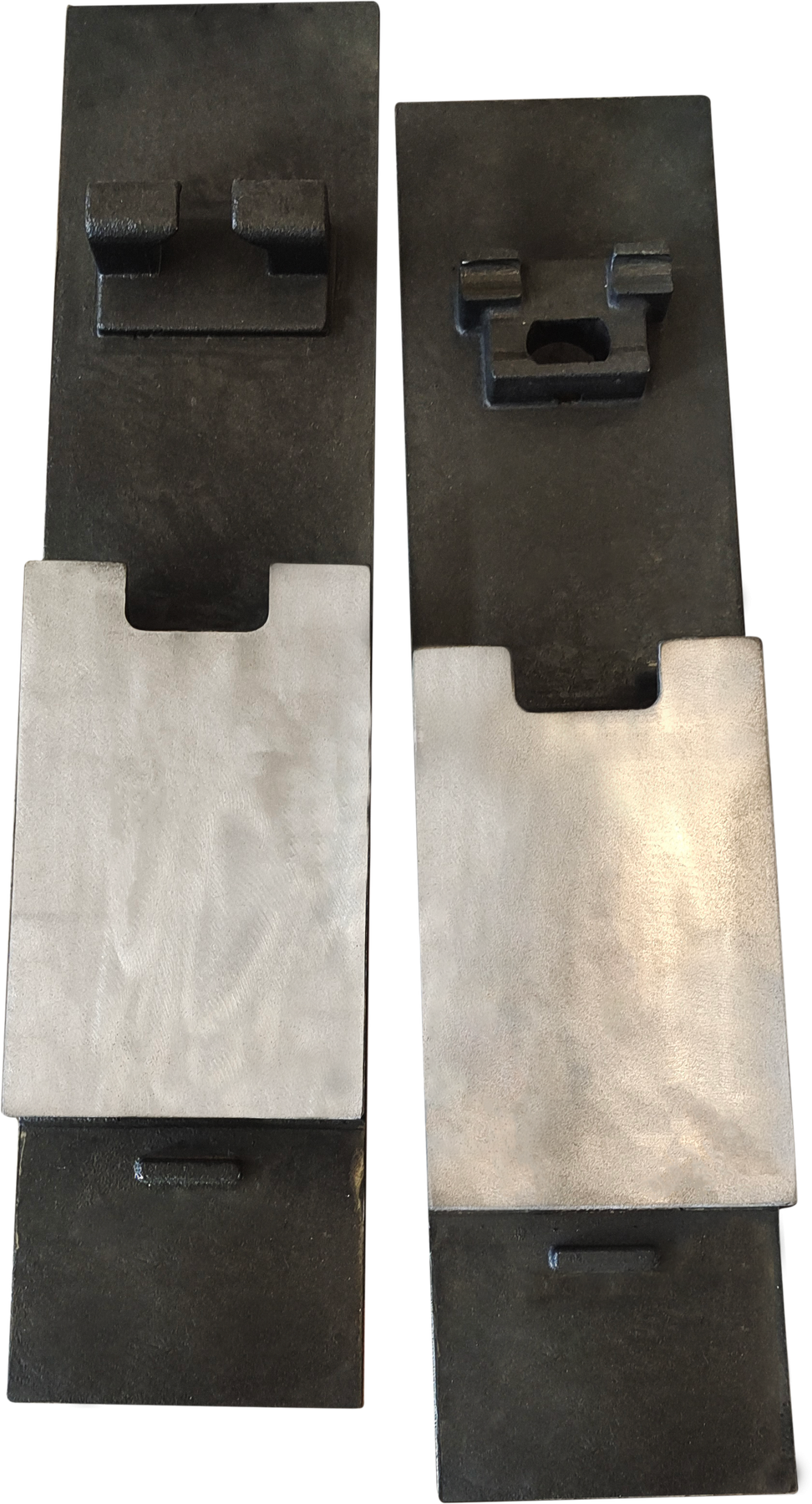
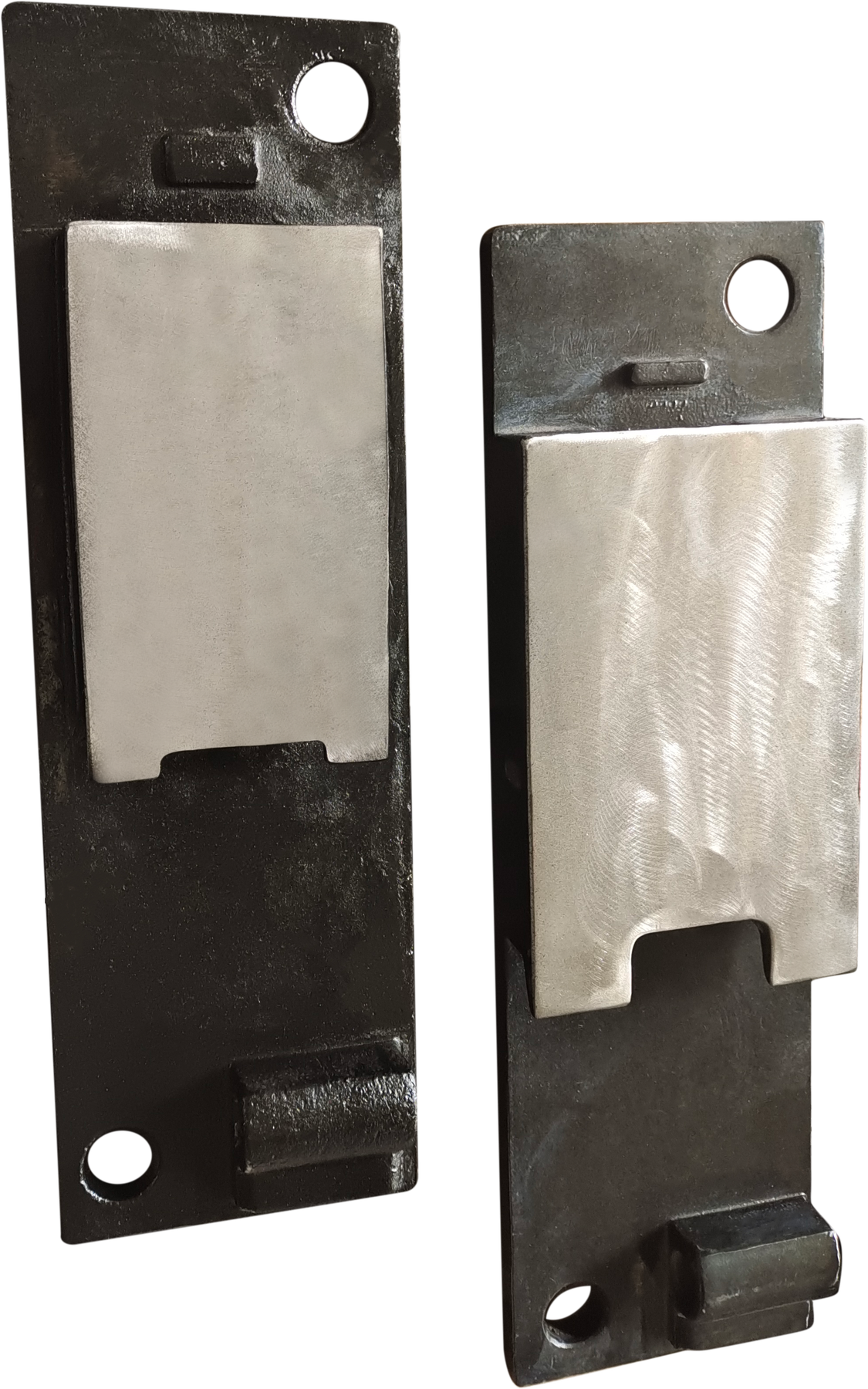
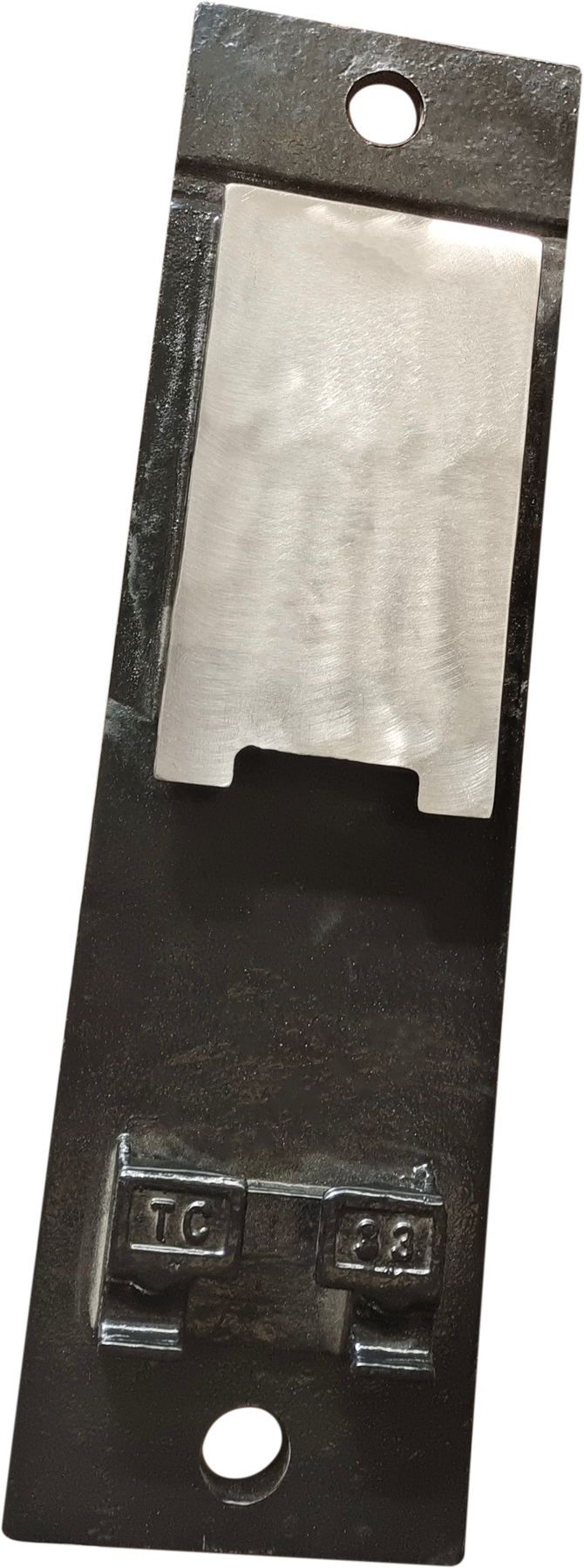
For new turnout projects and replacement orders, AGICO Rail supplies cast slide baseplates to your drawings. Review the structural design, surface treatment and test data with us to define the specification for your project.
One-Piece Structural Strength
Integrated casting removes the welded joint between the base plate and slide table. The 20SiMn cast steel structure addresses a common source of separation in welded assemblies.
A More Durable Sliding Surface
The hard, wear-resistant alloy surface helps resist scratches, corrosion and embedded debris, limiting factors that can increase switching resistance and lubrication needs.
Wear Protection with Lip Toughness
Hardening targets the sliding surface while the retaining lip remains unhardened. This balances wear resistance where the rail moves with toughness where the lip supports it.
Evidence for Your Technical Review
Review fatigue-test reports and application data against your turnout's operating conditions and acceptance requirements before selecting the product.
Made to Your Turnout Drawings
Specify the plate geometry, mounting holes, slide table, retaining lip, material and surface treatment. AGICO Rail provides drawing-based customization for your installation requirements.
Railway Slide Baseplate: Structure and Application
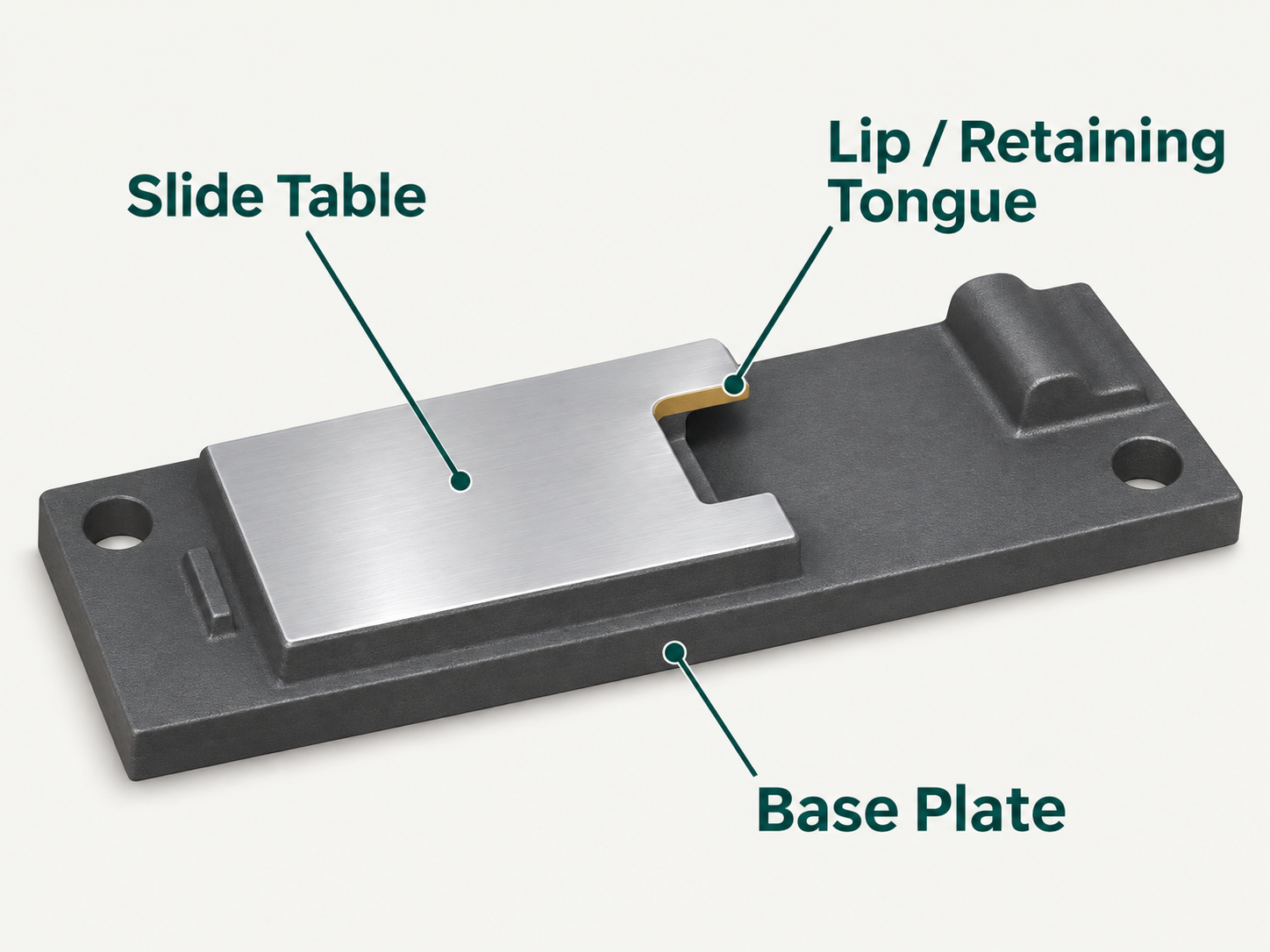
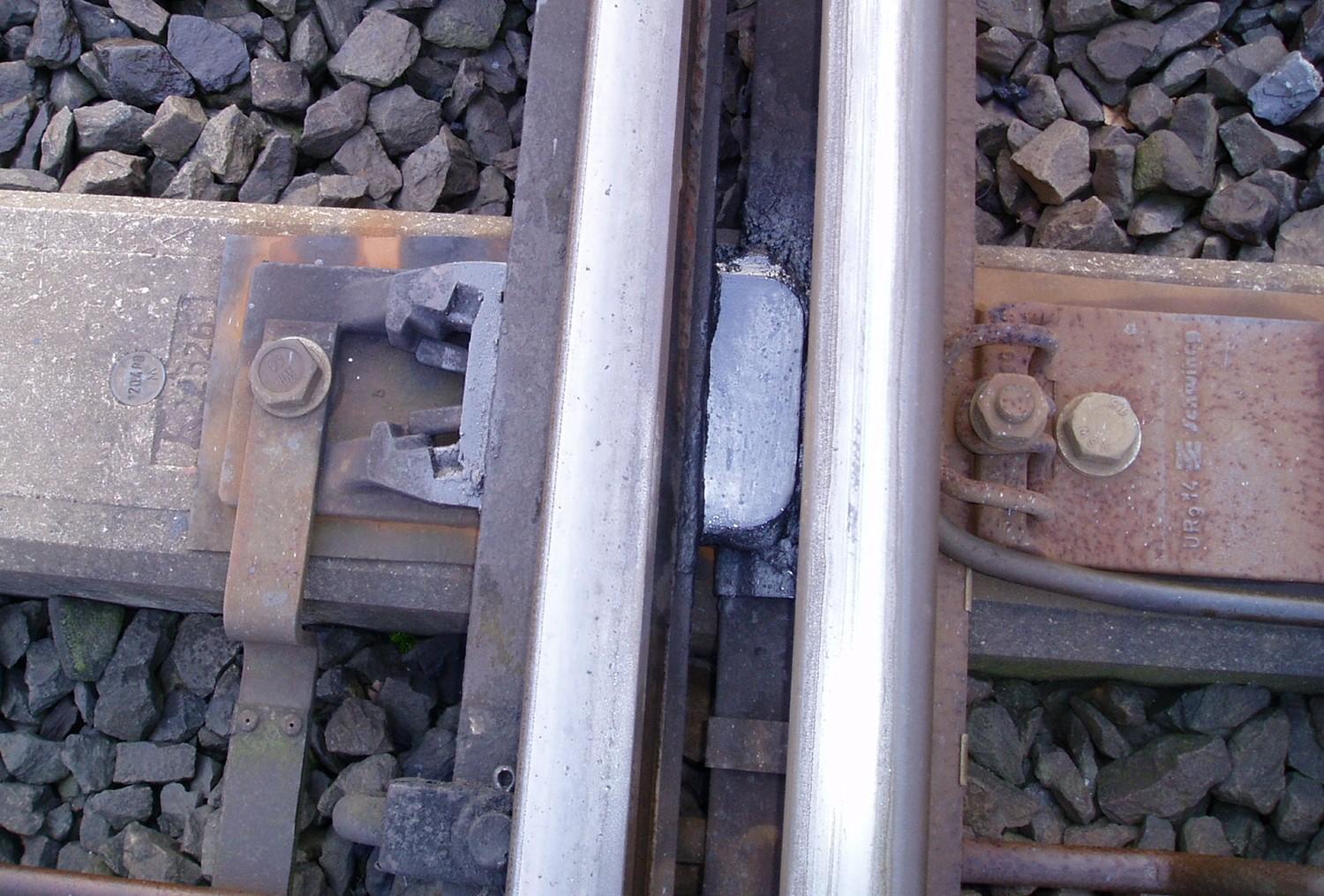
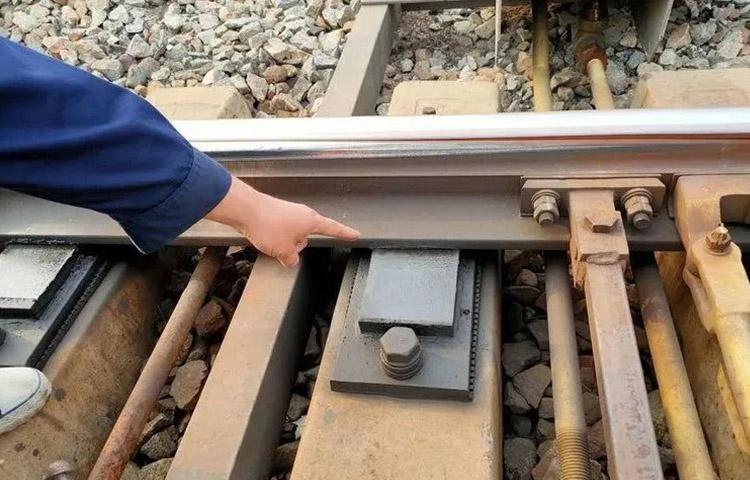
A slide baseplate is installed along the switch rail section of a railway turnout. It supports the stock rail and switch rail while providing a sliding platform for the lateral movement of the switch rail during turnout operation.
The product mainly consists of three structural parts:
Component | Function |
|---|---|
Base Plate | Forms the main supporting structure and connects with the turnout sleeper or support system. |
Slide Table | Provides the working surface for switch rail movement. |
Lip / Retaining Tongue | Forms part of the rail support and retaining structure. |
The dimensions and structural details depend on the turnout design, rail profile and installation requirements.
Common Problems & AGICO Solutions
Conventional slide baseplates may develop structural damage and surface wear during long-term service. AGICO addresses these common issues through integrated casting and targeted material and surface treatment.
Weld separation
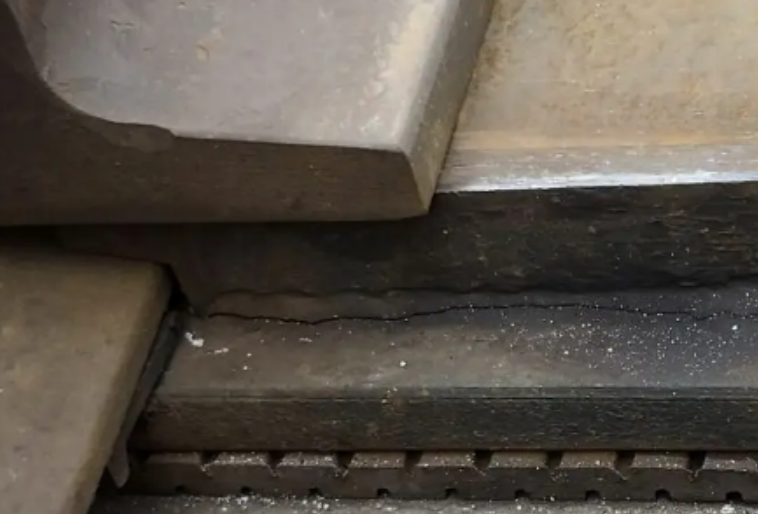
One-piece casting eliminates welded connections between the slide table and baseplate.
Baseplate cracking
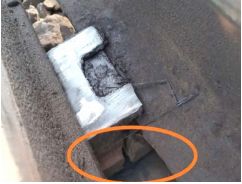
20SiMn cast steel and integrated structural design.
Retaining lip fracture
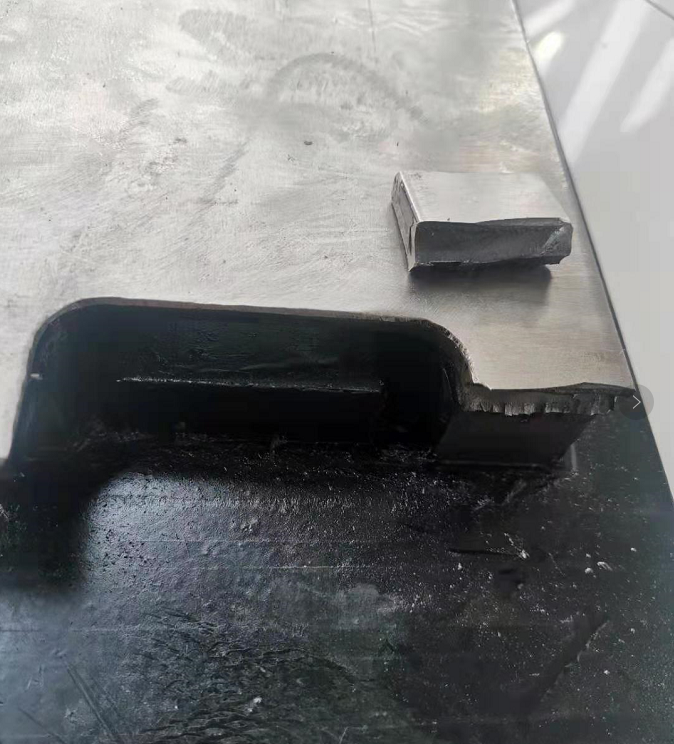
Retaining lip without hardening treatment to preserve material toughness.
Surface scratches and wear
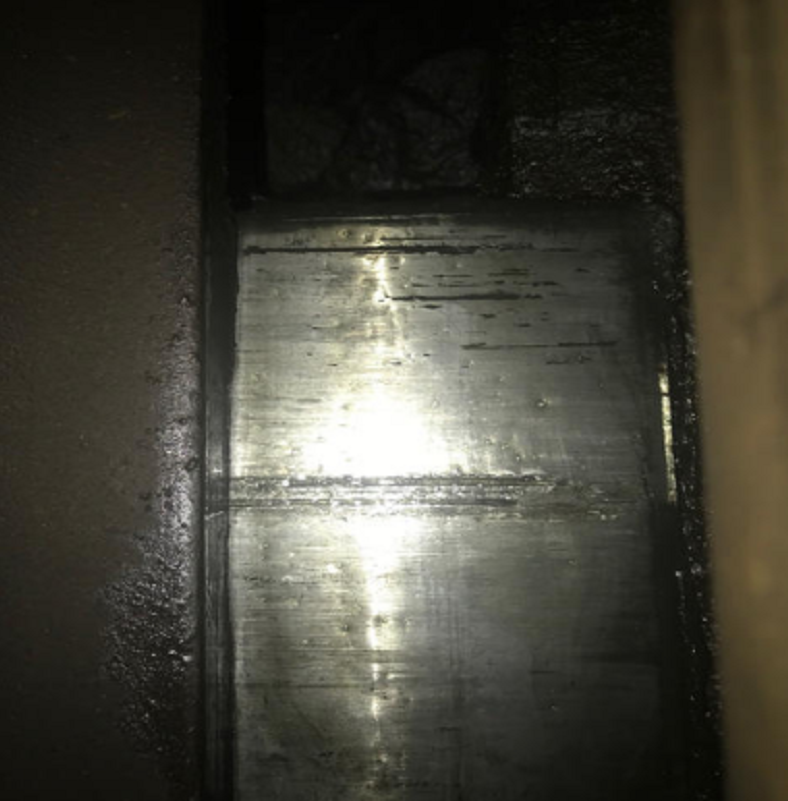
Multi-stage composite hardening treatment on the sliding surface.
Get Cast Slide Baseplates Made for Your Turnout Project
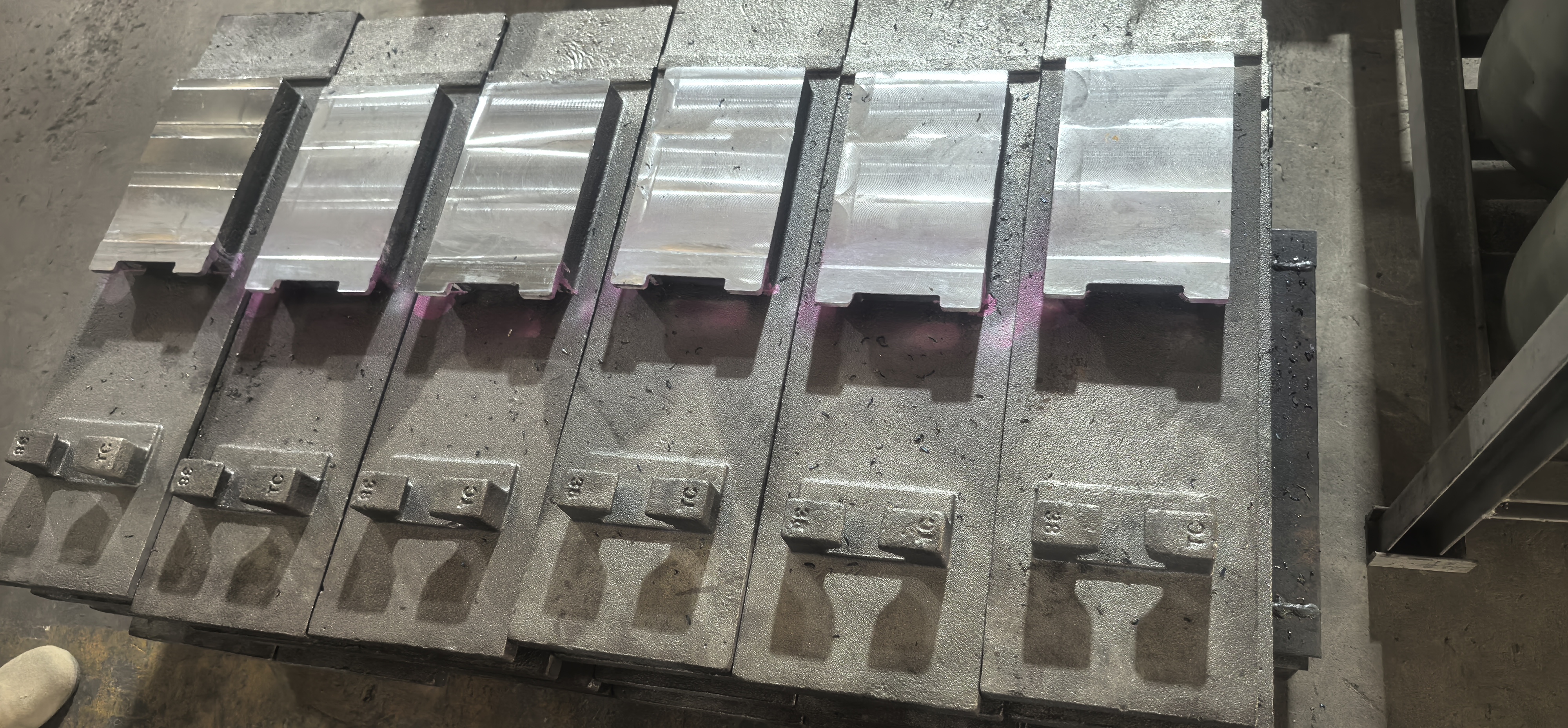
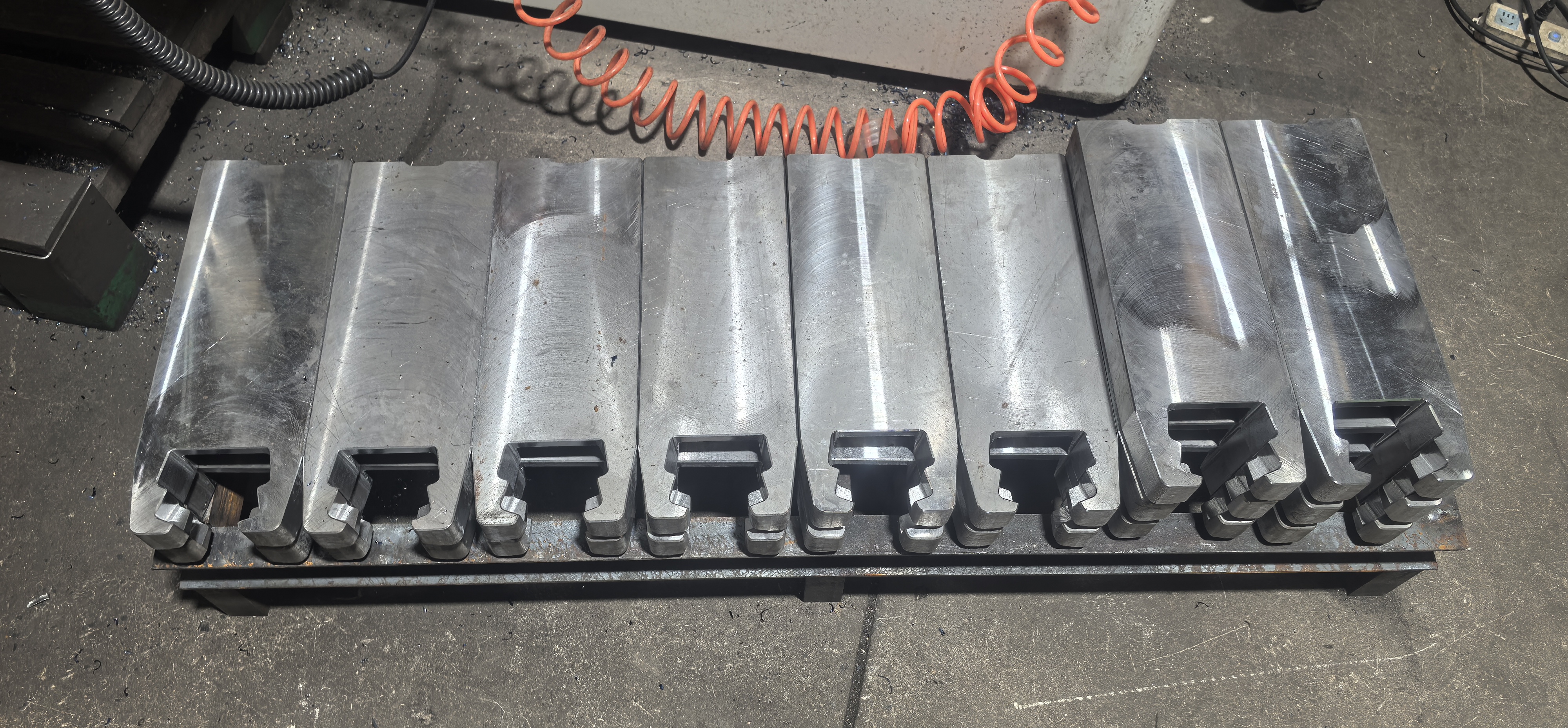
Integrated Cast Slide Baseplate Design
- One-Piece Casting: The base plate and slide table are formed as an integrated structure, without a welded joint between them.
- Cast Steel Construction: 20SiMn cast steel is used as the base material.
- Precision Casting: The manufacturing process is intended to improve casting structure and dimensional consistency.
Stepped Composite Hardening for the Sliding Surface
- Slide Table: A high-hardness, wear-resistant alloy treatment is applied to the designated sliding area to improve surface wear and corrosion resistance.
- Lip / Retaining Tongue: This area is not hardened, preserving its toughness and reducing the risk associated with excessive hardness under repeated impact.
Cast Slide Baseplate Performance
The supplied test data compares the integrated cast slide baseplate with an ordinary slide baseplate.
Application Data Comparison
| Test Item | Ordinary Slide Baseplate | Integrated Cast Slide Baseplate | Reported Performance Index |
|---|---|---|---|
| Tensile Strength | 375 MPa | 540 MPa | 144% |
| Yield Strength | 224 MPa | 310 MPa | 138% |
| Impact Toughness | 28 J | 56 J | 200% |
| Slide Table Hardness | 148 HBW | 510 HBW | 345% |
| 96-hour Salt Spray Test | Extensive rusting | Protection Grade 9 | 100% |
Experimental Data Comparison
The following figures are from the experimental comparison in the product technical documentation.
Test Item | Ordinary Slide Baseplate | Integrated Cast Slide Baseplate | Reported Performance Index |
|---|---|---|---|
Tensile Strength | 370 MPa | 510 MPa | 138% |
Yield Strength | 235 MPa | 295 MPa | 126% |
Impact Toughness | 27 J | 39 J | 144% |
Slide Table Hardness | 156 HBW | 350 HBW | 224% |
96-hour Salt Spray Test | Extensive rusting | Protection Grade 9 | 100% |
The test results indicate higher tensile strength, yield strength, impact toughness and slide table hardness in the tested integrated cast product. The salt spray comparison also shows improved corrosion resistance of the treated sliding surface. The product documentation reports more than two years of evaluation and repeated testing, together with track application observations.
Note: These figures are based on the supplied product test data. Actual product requirements and acceptance criteria should be confirmed against the relevant inspection reports and project specifications.
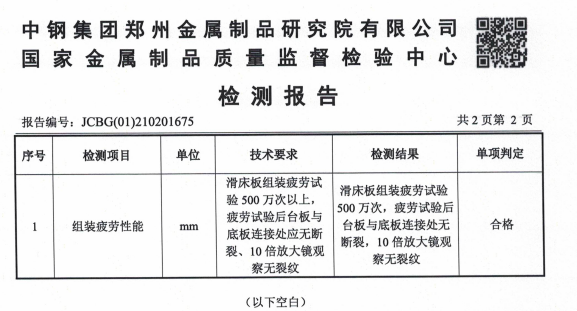
Fatigue Test: 5 Million Cycles Without Cracks
Our integrated cast slide baseplate completed 5 million fatigue cycles without cracks, exceeding the 2 million-cycle benchmark used for comparison.
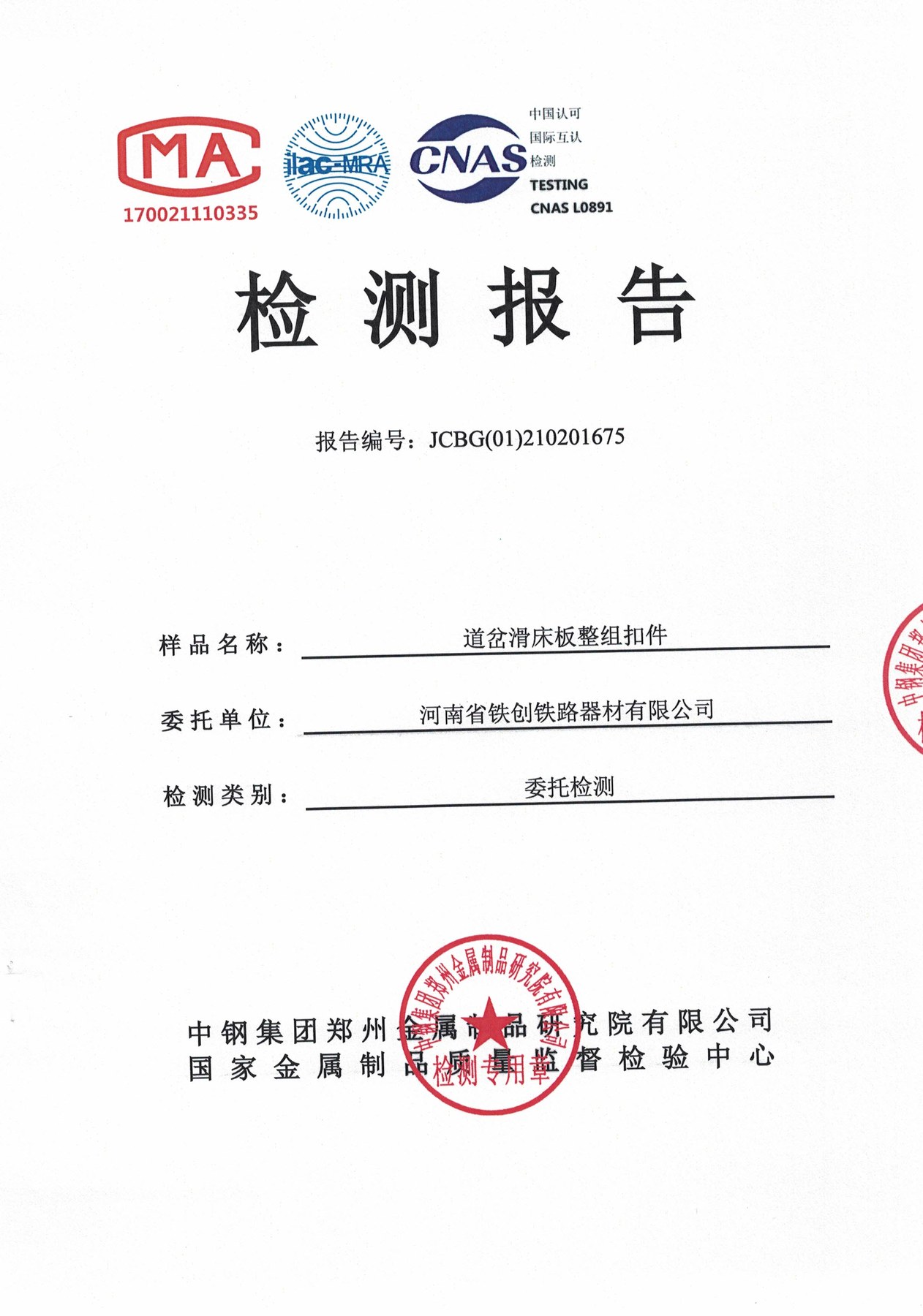
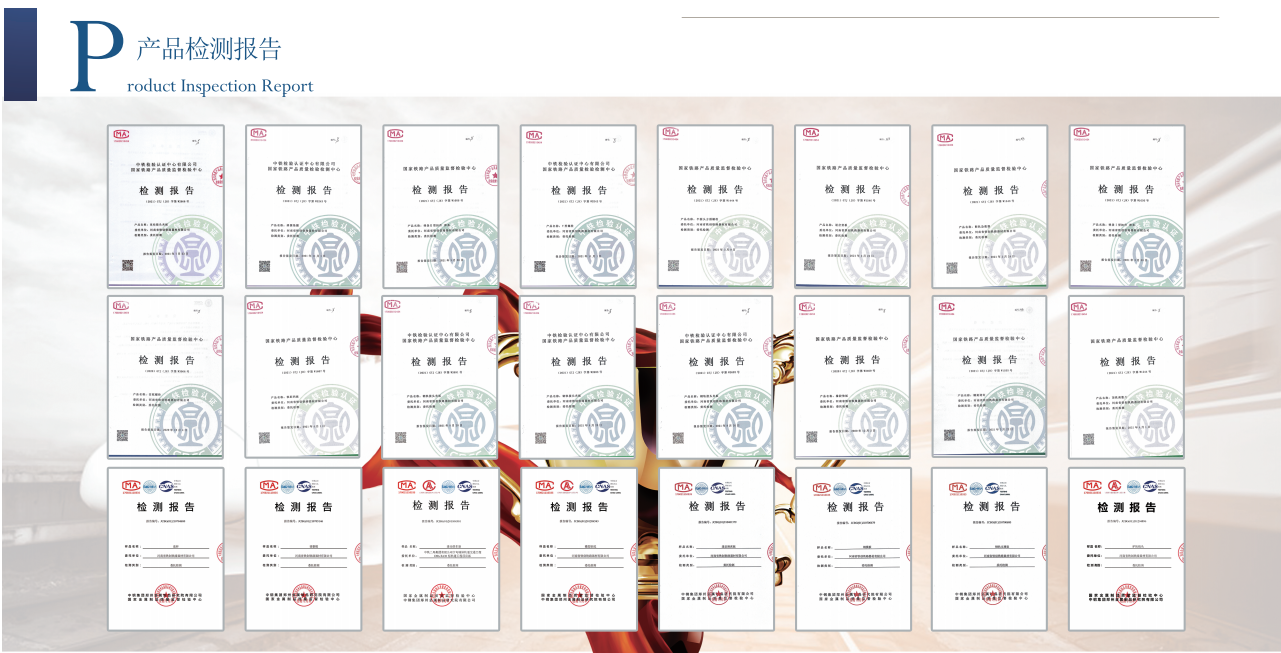
View the test report below, or send us your turnout drawings and operating requirements for technical review and a quotation. Actual service life depends on turnout design, track conditions, installation quality, maintenance and operating frequency.
Traffic-frequency estimate
- Ordinary product
- 285 days
- Integrated cast product
- ≥714 days
Guangzhou Metro turnback estimate
- Ordinary product
- 133 days
- Integrated cast product
- ≥333 days
These service-duration estimates are reproduced from the product documentation and its assumed train frequencies. They are estimates, not a guaranteed service life.
View Test ReportsHide Test Reports3 report pages and result details
Cast Slide Baseplate vs. Welded Slide Baseplate
Both cast and welded slide baseplates are used in railway turnout systems, but their structural designs differ.
Comparison | Welded Slide Baseplate | Integrated Cast Slide Baseplate |
|---|---|---|
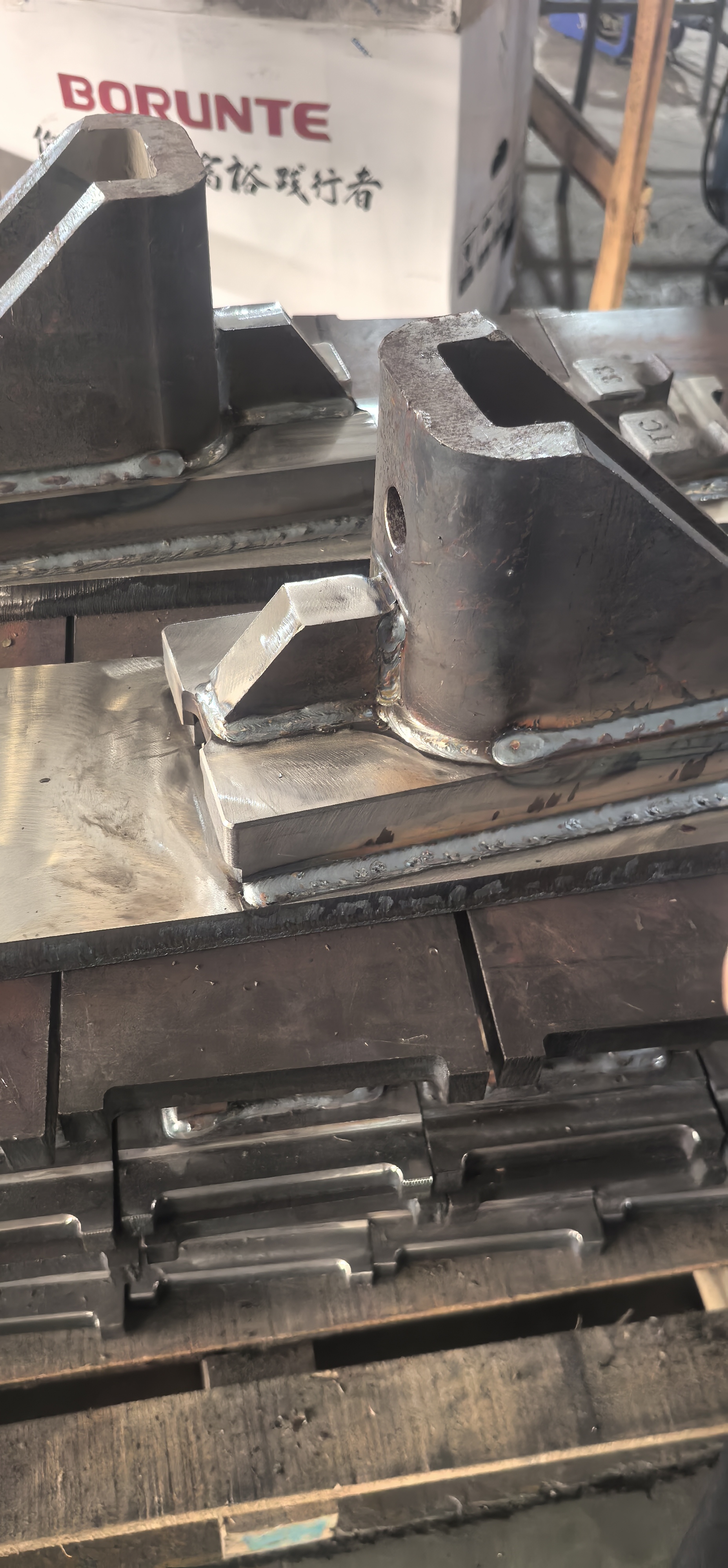
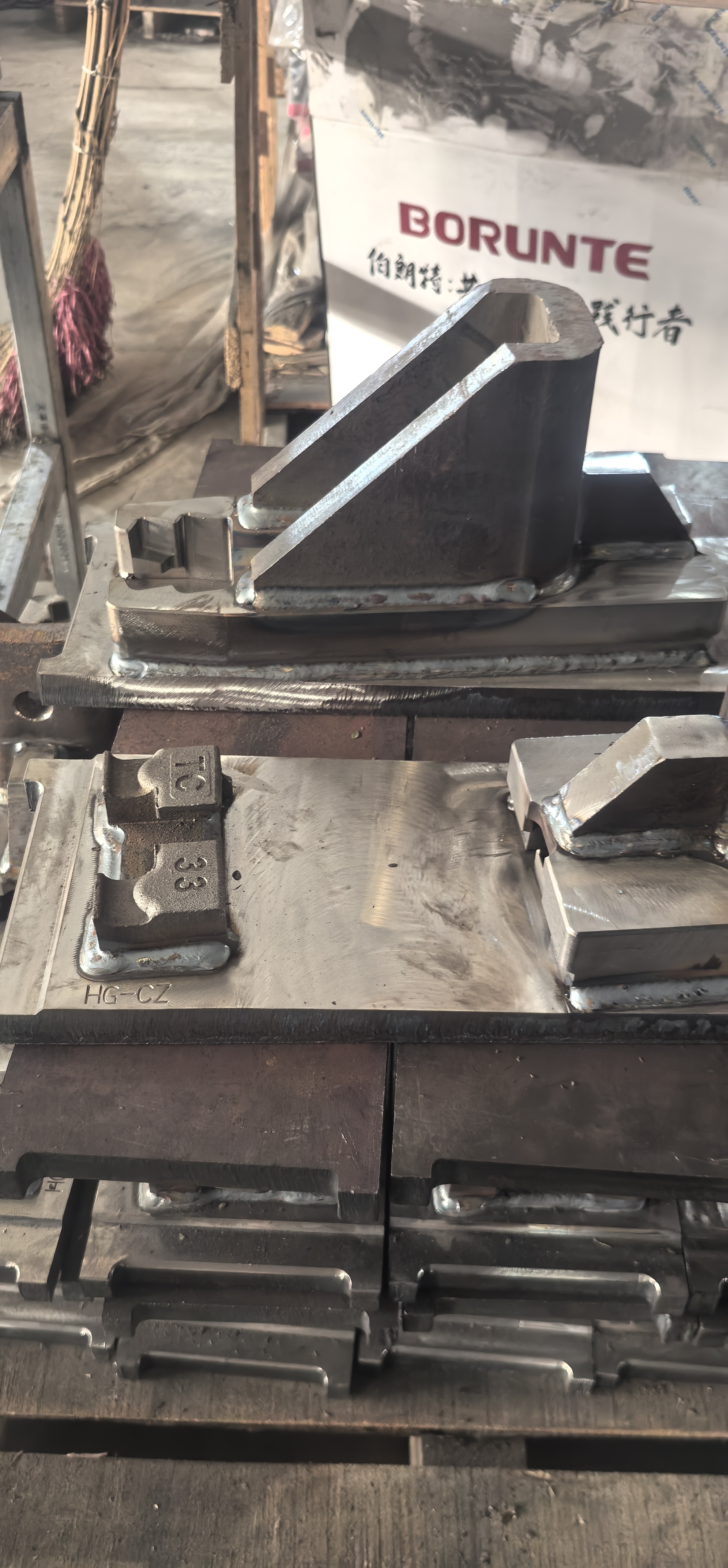
| Product view | 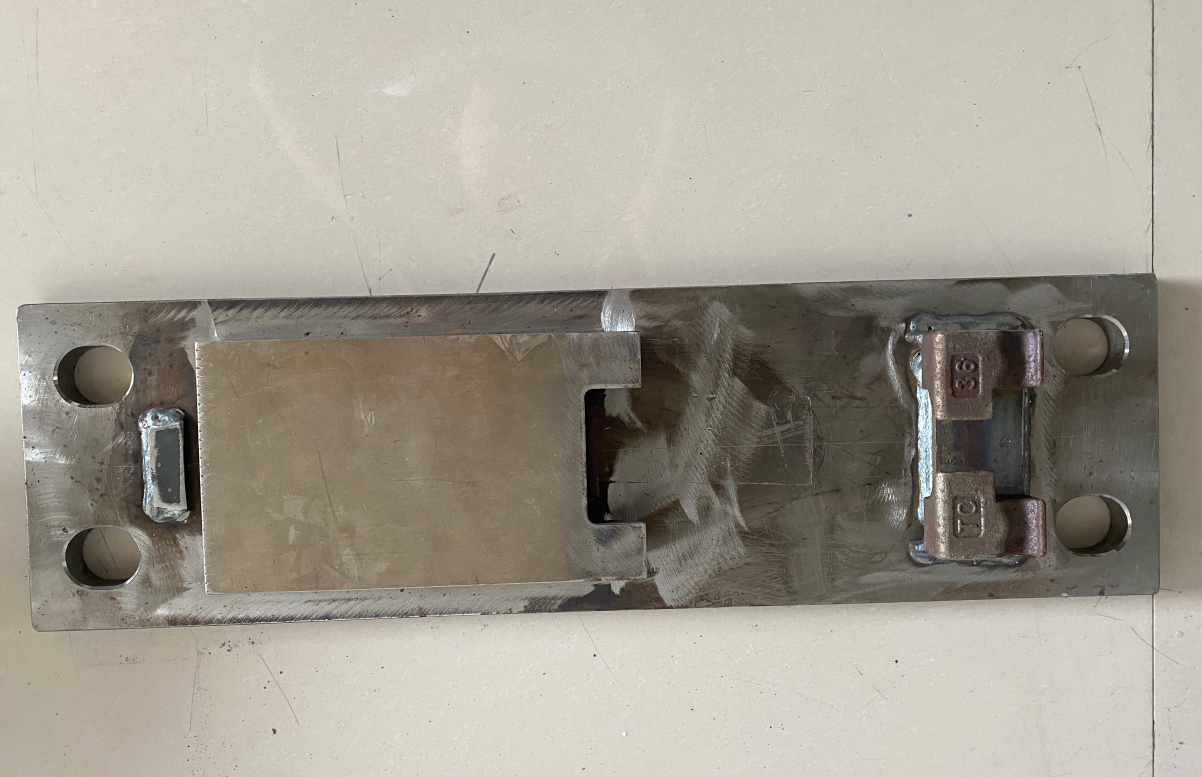 | 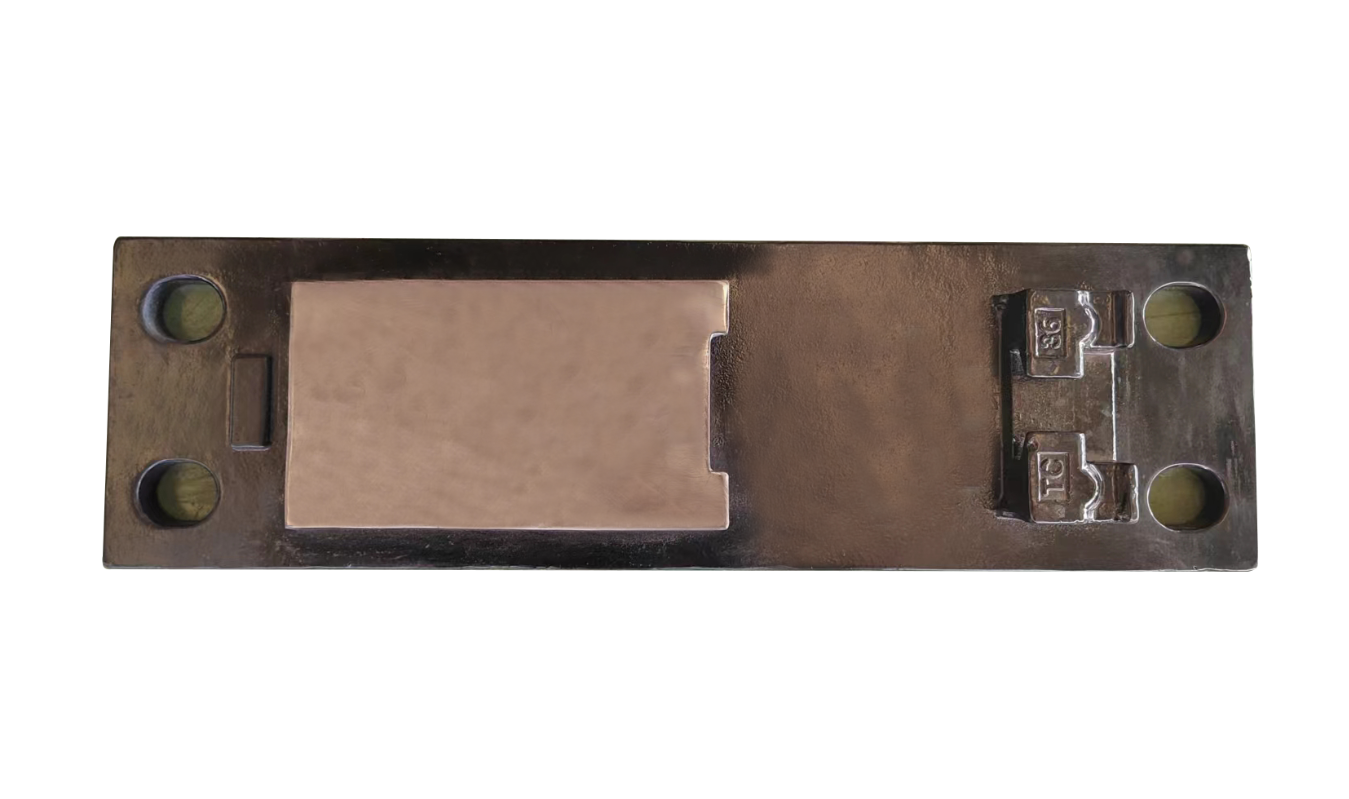 |
Structure | Separate components joined by welding | One-piece integrated casting |
Connection | Welded joints | No welded joint between the base plate and slide table |
Structural Consideration | Weld quality and fatigue at welded joints | Casting quality and overall structural integrity |
Sliding Surface | Depends on material and surface treatment | Stepped composite hardening |
Maintenance Consideration | May require regular lubrication and inspection | Treated sliding area is designed to reduce rust and lubrication frequency |
The choice between the two types should be based on the turnout design, operating conditions, maintenance requirements and project specifications.
Supplier Qualifications and Product Patents
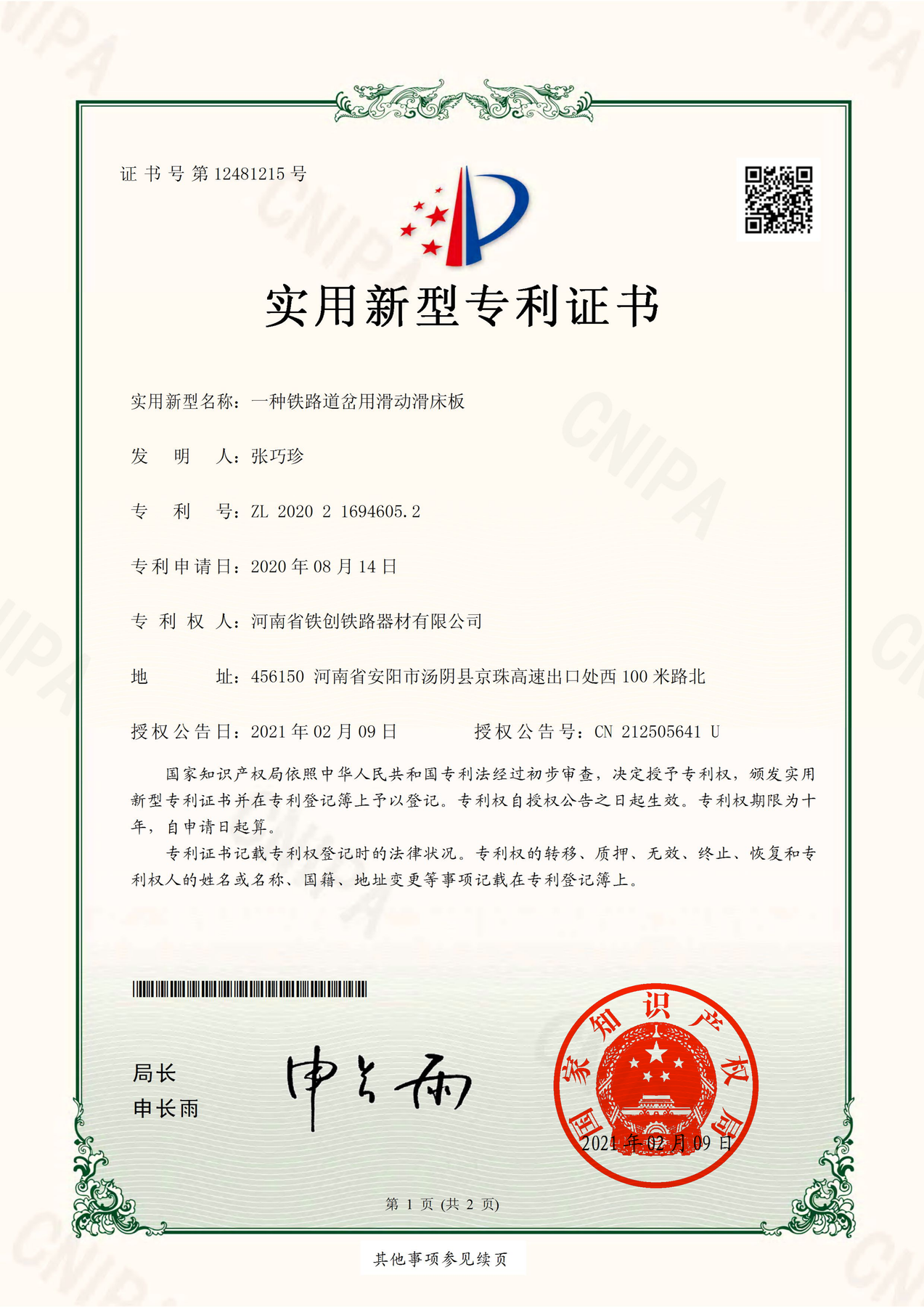
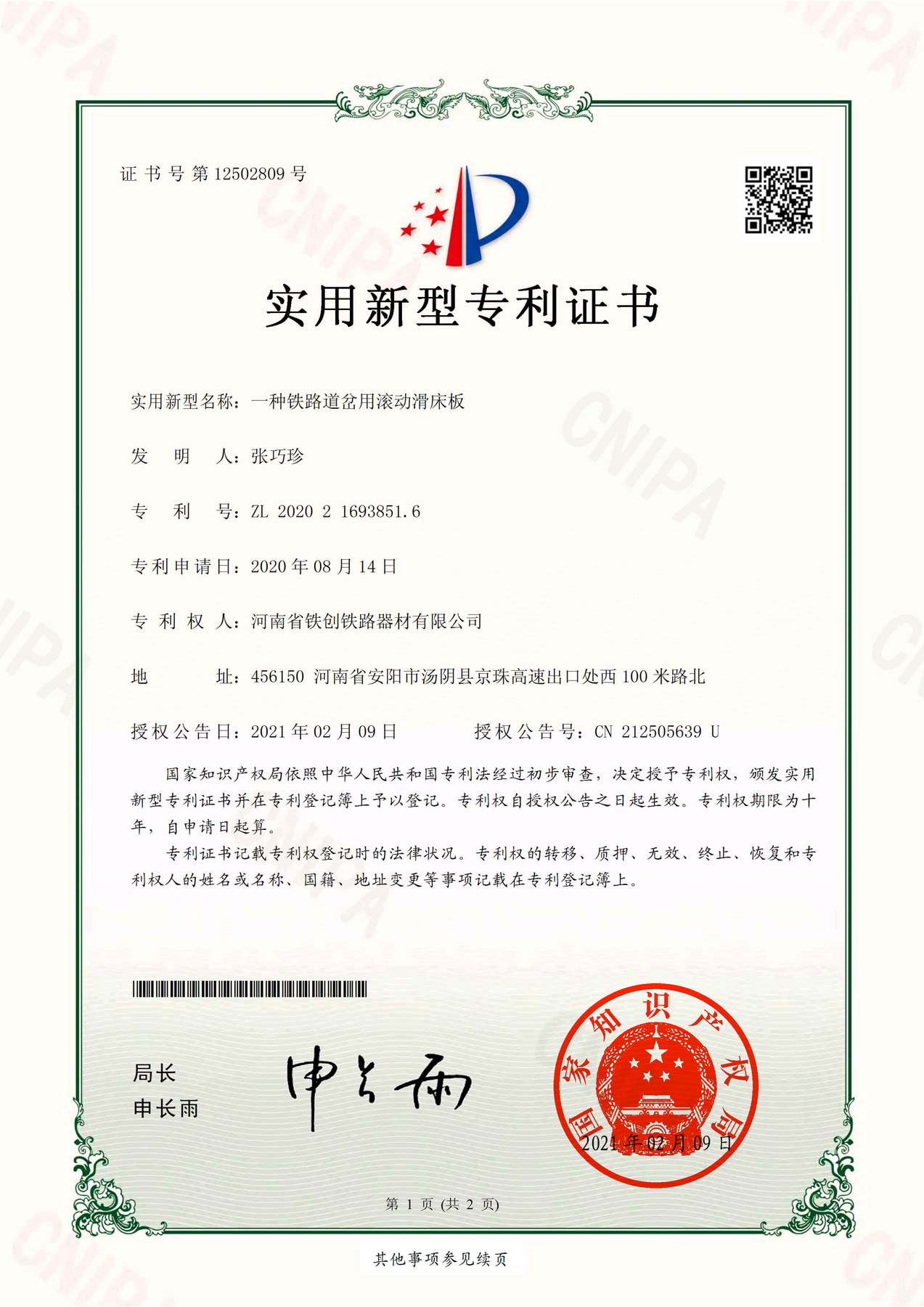
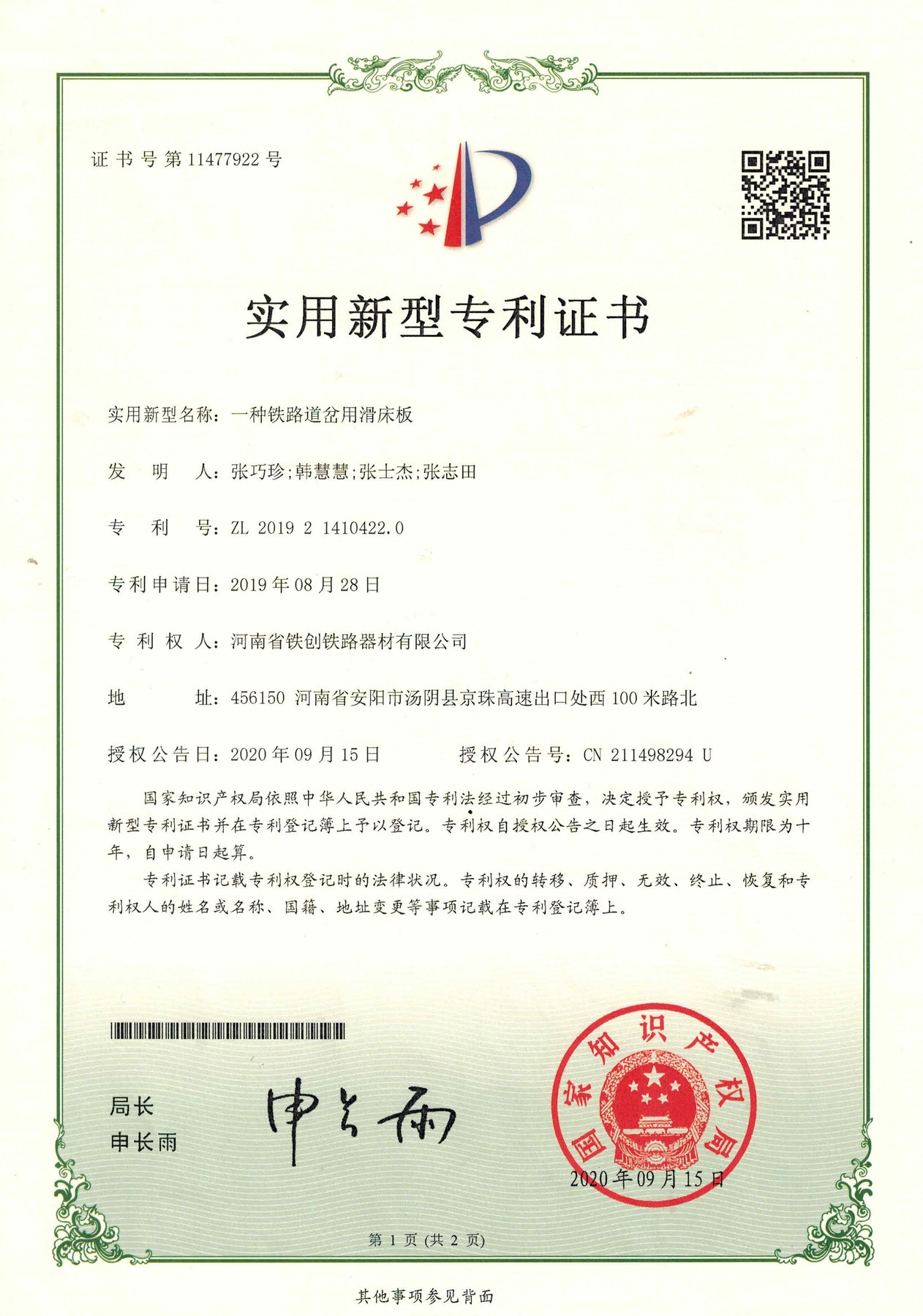
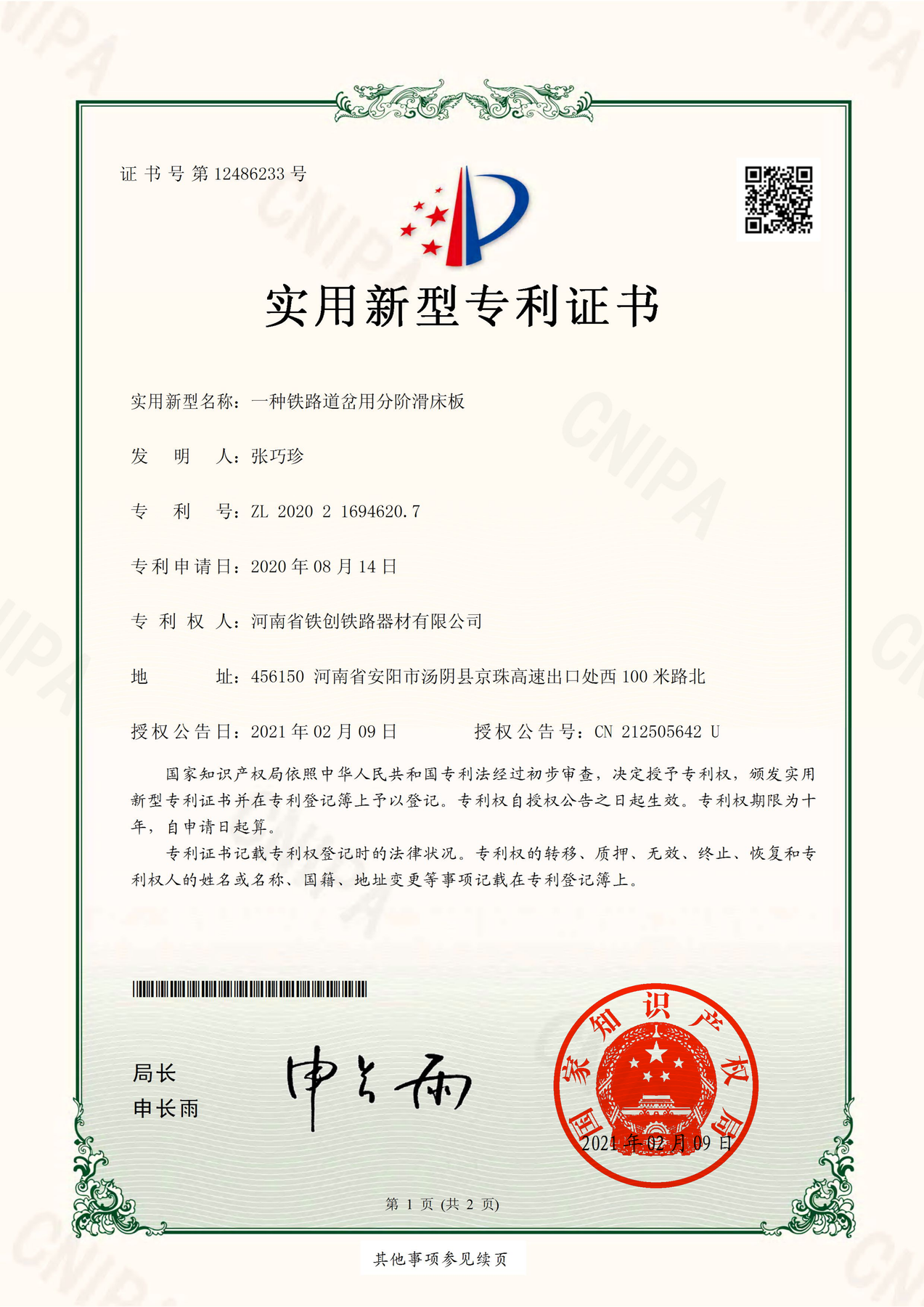
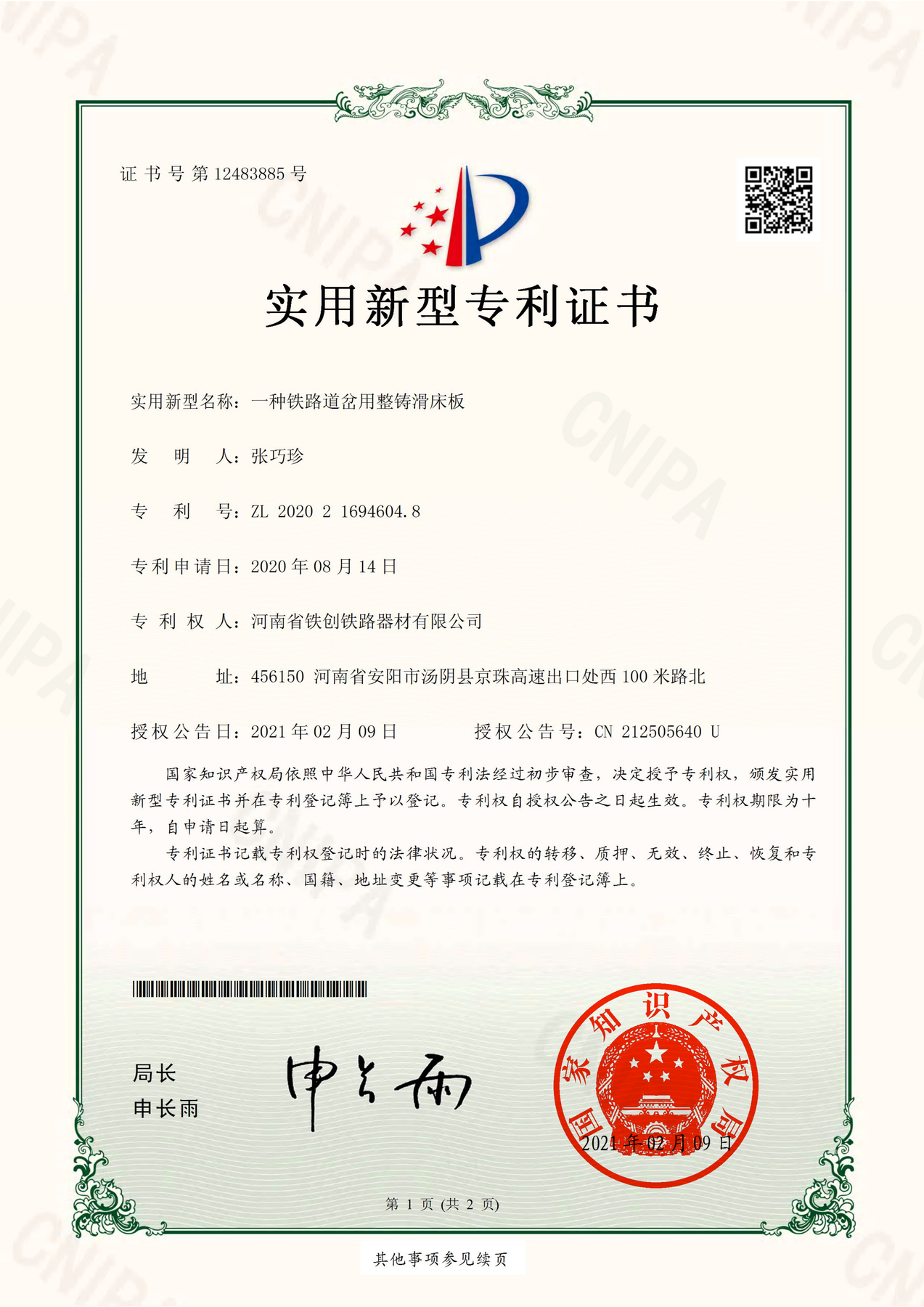
These supplied documents name Henan Tiechuang Railway Equipment Co., Ltd. The original certificate scope, holder and validity dates are retained for review.
Management System Certificates
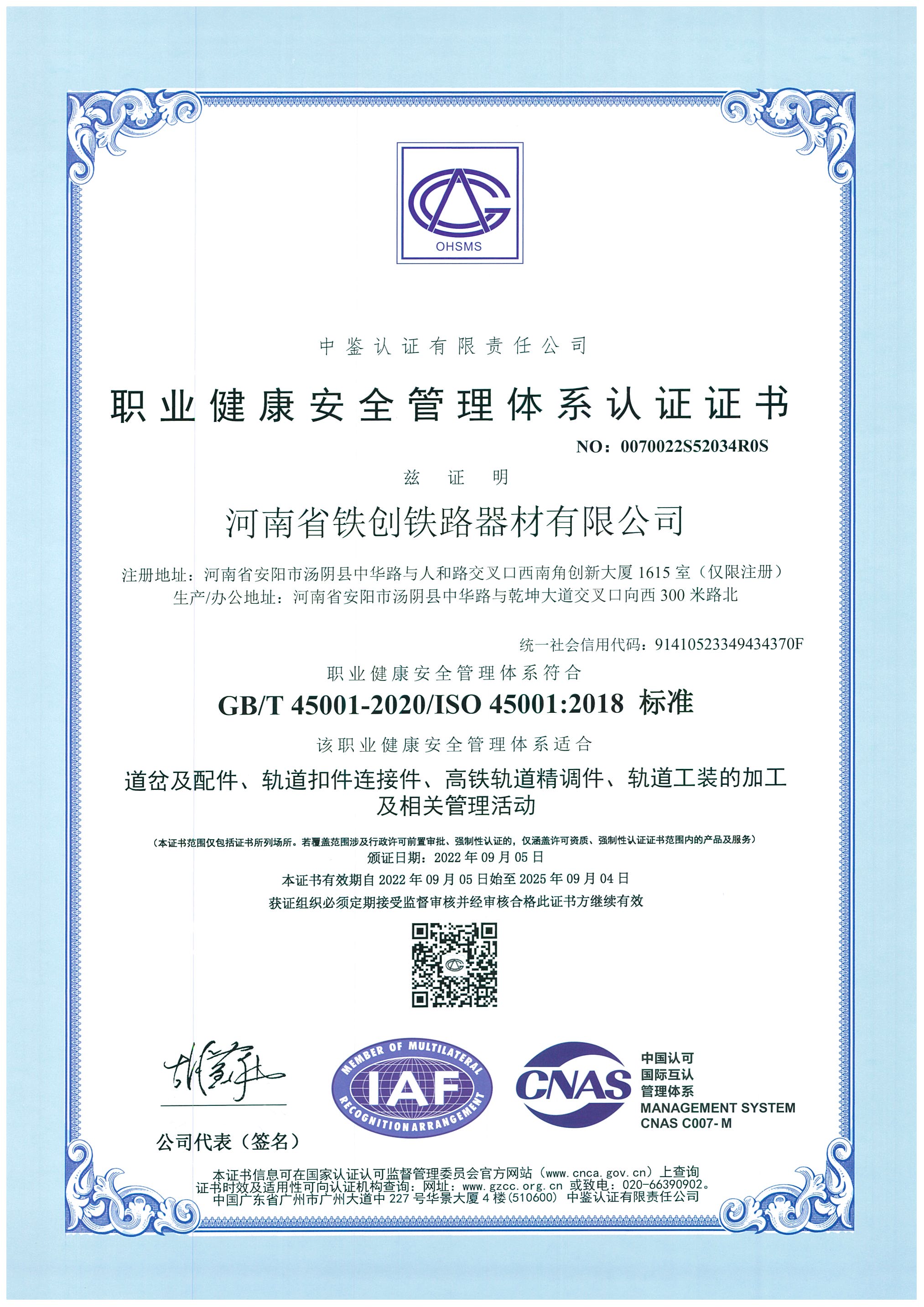 ISO 45001 — Occupational Health & Safety
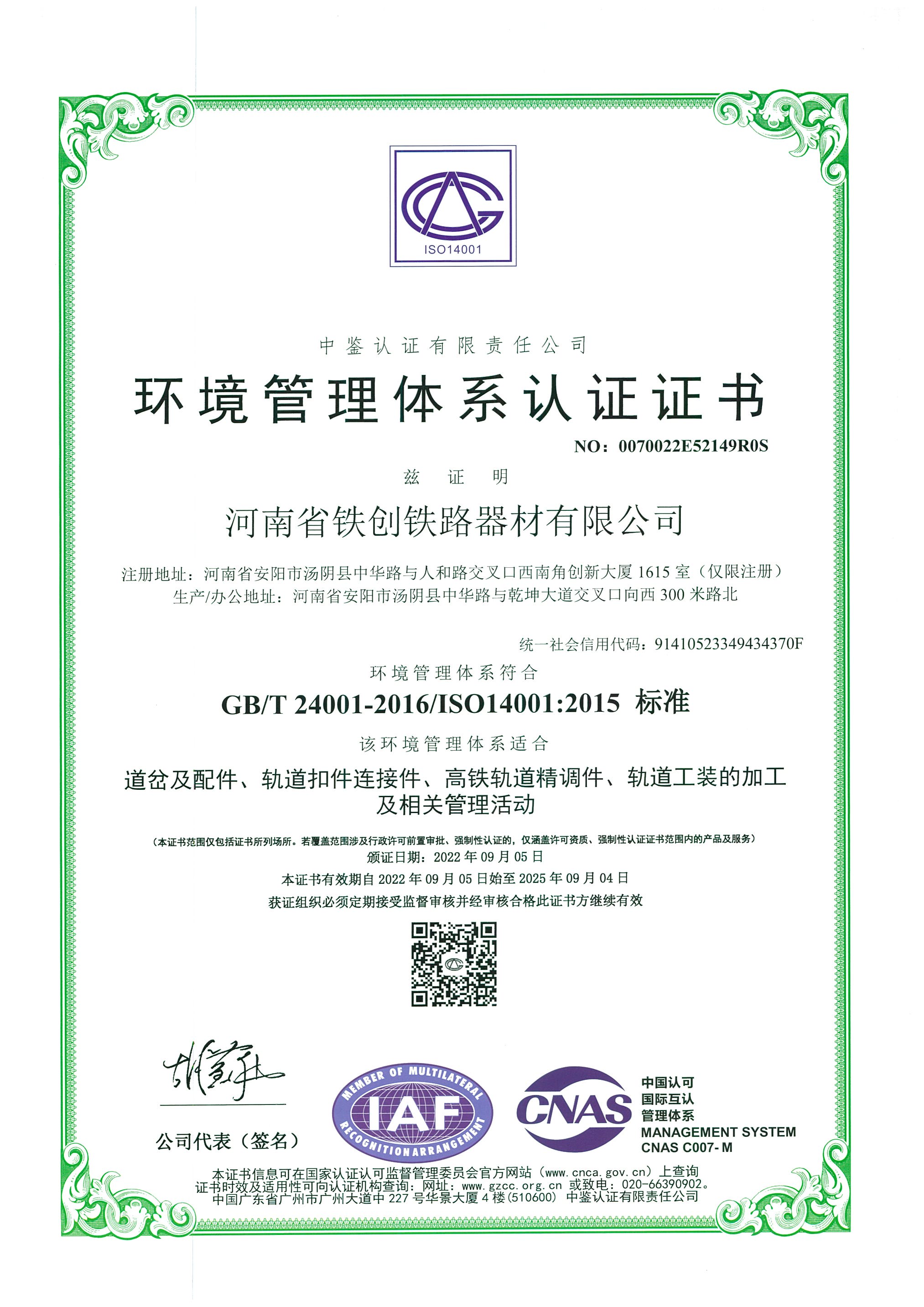 ISO 14001 — Environmental Management
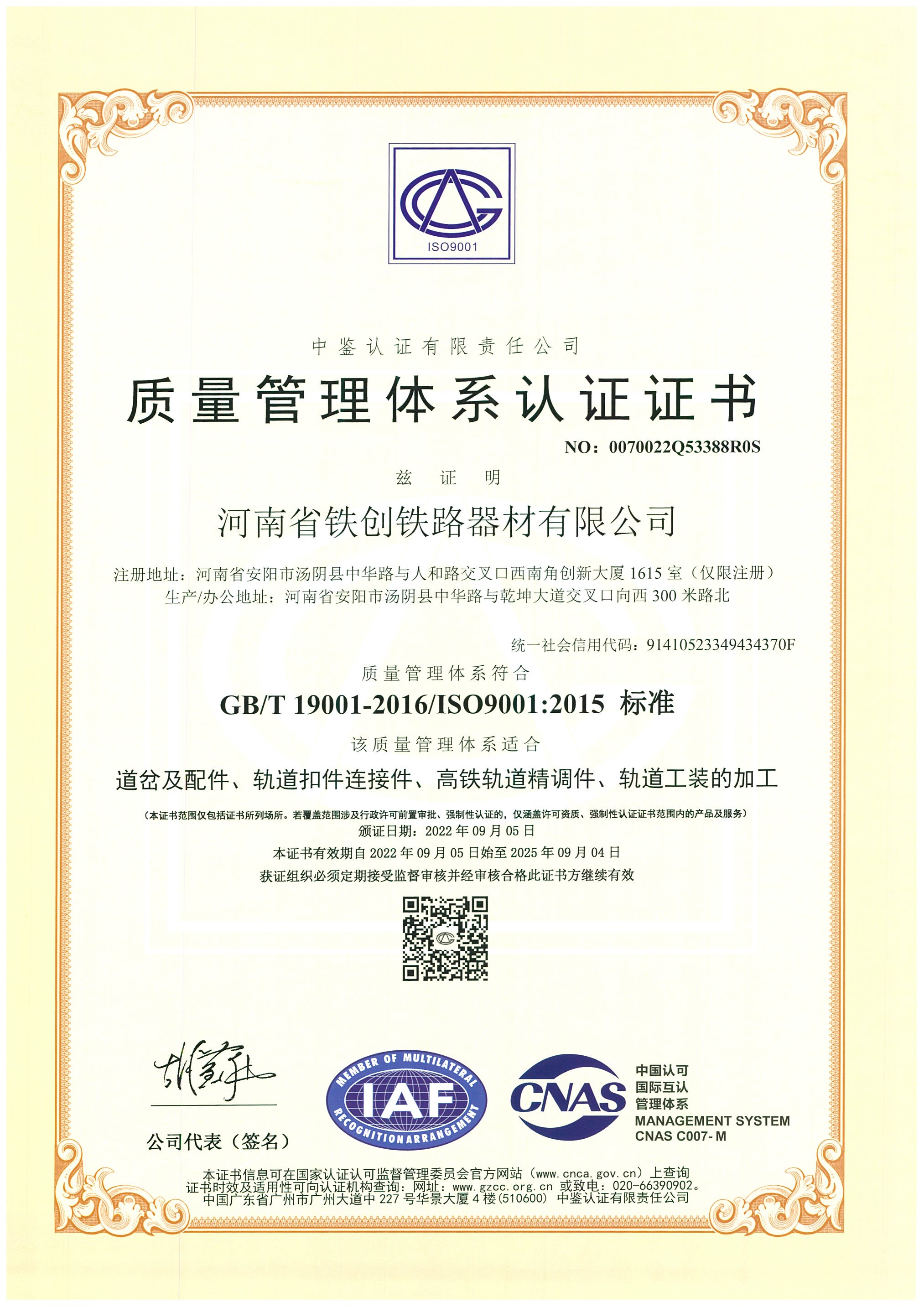 ISO 9001 — Quality Management
Slide Baseplate Utility Model Patents

Frequently Asked Questions
1. What is an integrated cast slide baseplate?
An integrated cast slide baseplate is manufactured as a single casting rather than assembling the base plate and slide table through welding. This eliminates the welded joint between these components.
2. What material is used for this cast slide baseplate?
The product documentation specifies 20SiMn cast steel as the base material. Additional material requirements should be confirmed according to the project drawing.
3. What is stepped composite hardening?
It is a selective surface treatment process. The designated slide table area receives a high-hardness treatment to improve wear and corrosion resistance, while the lip or retaining tongue remains unhardened to preserve toughness.
4. What is the fatigue test result?
According to the supplied product documentation, the integrated cast slide baseplate completed 5 million fatigue cycles without cracks. The test report and applicable test conditions should be checked when confirming project acceptance requirements.
5. Can slide baseplates be manufactured according to customer drawings?
Yes. AGICO Rail provides drawing-based customization. Customers can submit technical drawings, material requirements and order quantities for product evaluation and quotation.
6. Is a cast slide baseplate suitable for replacing a welded slide baseplate?
Replacement suitability depends on the turnout structure, dimensions, rail profile and mounting arrangement. The replacement design should be checked against the original drawings before production.